Most content approval problems start before the draft exists.
The writer gets a vague idea. The designer gets unclear asset instructions. The reviewer receives a post without knowing the goal. The client gives feedback on strategy instead of copy. The approver asks for changes that should have been clarified in the brief.
That is why an approval-ready content brief matters.
A good brief does not only tell a creator or team what to make. It tells the whole workflow what the content is supposed to achieve, who needs to review it, what claims are allowed, what CTA should be used, and what would make the post ready to publish.
This template helps teams create briefs that reduce revisions, speed up approval workflows, and make scheduling safer.
TL;DR
An approval-ready content brief should include:
content goal
audience
platform
format
source material
core message
brand voice
claims allowed and claims to avoid
CTA and link
asset requirements
reviewer and approver
approval deadline
measurement goal
repurposing potential
The key rule:
A brief is not complete until the reviewer knows what they are approving.
If the approver has to guess the goal, the workflow will slow down.
Why normal briefs fail
Many briefs are too vague.
Examples:
“Make a post about our new feature.”
“Create something for LinkedIn.”
“Promote the campaign.”
“Do a carousel about productivity.”
“Make this more engaging.”
These instructions do not define the outcome. They also do not define approval requirements.
A better brief says:
Create a LinkedIn post for social media managers explaining why approval gates prevent wrong-version publishing. Use a practical tone, avoid pricing claims, link to the approval workflow page, and route the final version to the marketing lead before scheduling.
This is easier to execute and approve.
The BRIEF framework
Use the BRIEF framework.
B — Business goal
R — Reader or audience
I — Input material
E — Execution details
F — Final approval rules
This keeps the brief short but complete.
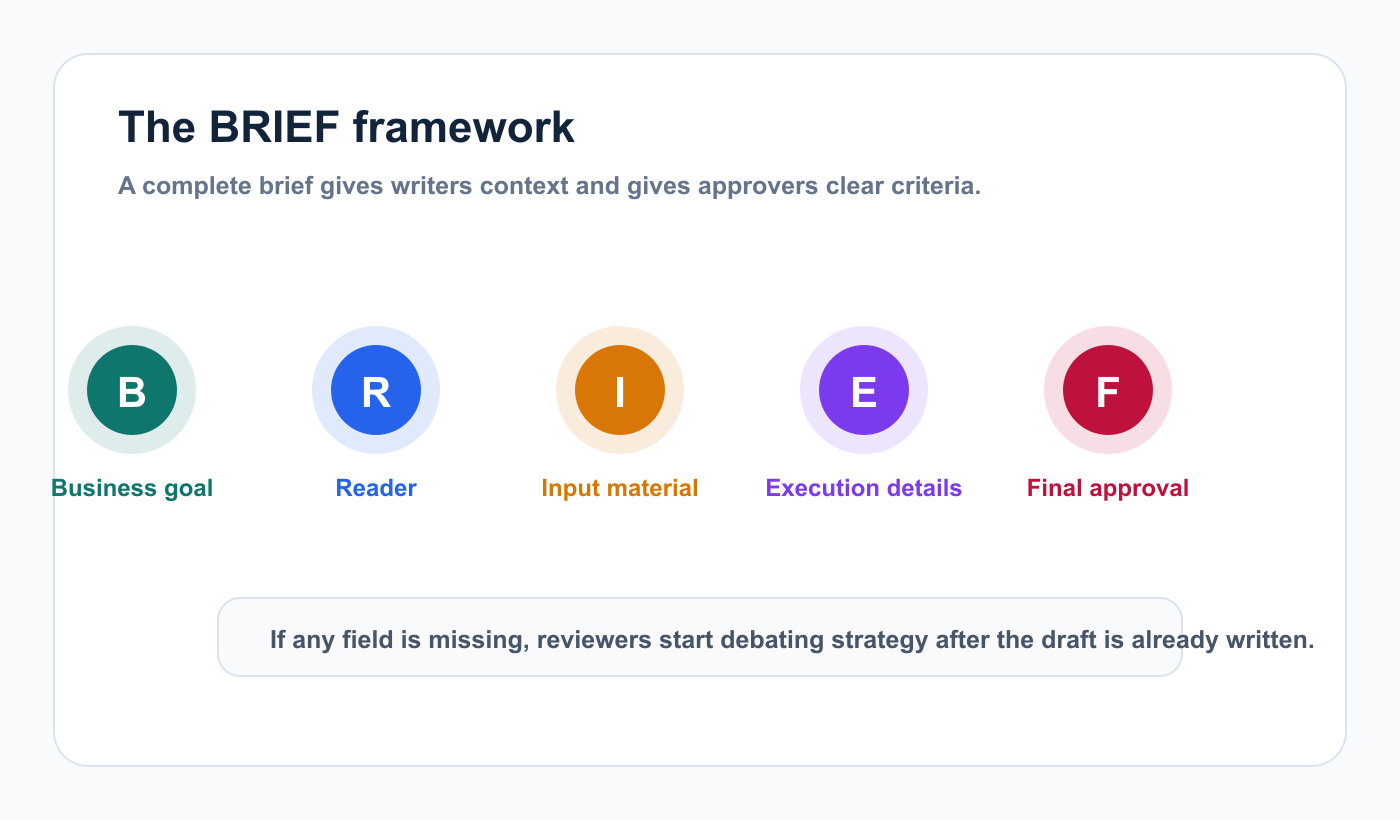
The BRIEF framework keeps strategy, source material, execution, and approval rules together.
B — Business goal
Start with the reason.
Ask:
What should this content achieve?
Is the goal awareness, engagement, traffic, conversion, education, retention, or client reporting?
What should the reader do next?
How will we measure success?
Examples:
GoalBetter brief languageAwarenessIntroduce workflow-first content planning to small teamsTrafficDrive readers to the comparison hubConversionEncourage creators to try Tareno’s workflow featuresEducationExplain why reports should create repurposing tasksRetentionTeach users how to reuse old content safely
The goal shapes the CTA, platform, and measurement.
R — Reader or audience
A post written for a founder should not sound the same as a post written for a social media manager.
Define:
audience role
pain point
knowledge level
objections
desired outcome
language style
Example:
Audience:
Social media managers at small agencies.

Pain:
Client approvals slow down the calendar.

Knowledge level:
They understand scheduling tools but may not think in workflow automation.

Desired outcome:
They should understand why approval gates and activity visibility matter.
This helps the writer choose better examples.
I — Input material
A strong brief gives source material.
Input sources can include:
blog section
product feature
customer question
support ticket
sales objection
competitor topic
campaign message
old high-performing post
webinar segment
report insight
founder note
screenshot
customer quote
Without input material, creators invent context. That can create inaccurate claims.
Add links, notes, screenshots, or reference examples where possible.
E — Execution details
Execution details define what should be made.
Include:
platform
format
length
caption style
asset type
CTA
link
hashtags
tone
deadline
owner
campaign label
Example:
Platform: LinkedIn
Format: Text post
Tone: Practical, direct, not hype-driven
Length: 120–180 words
CTA: Compare workflow-first tools
Link: /compare
Asset: None
Owner: Content lead
Deadline: Friday
The clearer the execution details, the easier the review.
F — Final approval rules
This is what makes the brief approval-ready.
Define:
reviewer
final approver
approval deadline
risk level
whether claim verification is needed
whether the asset needs approval
whether re-approval is needed after changes
whether the post can be scheduled before approval
Approval fields:
FieldExampleRisk levelMediumReviewerProduct marketingFinal approverMarketing leadApproval deadlineThursday 12:00Publish gateYesRe-approval neededIf claim or CTA changes
This prevents confusion later.
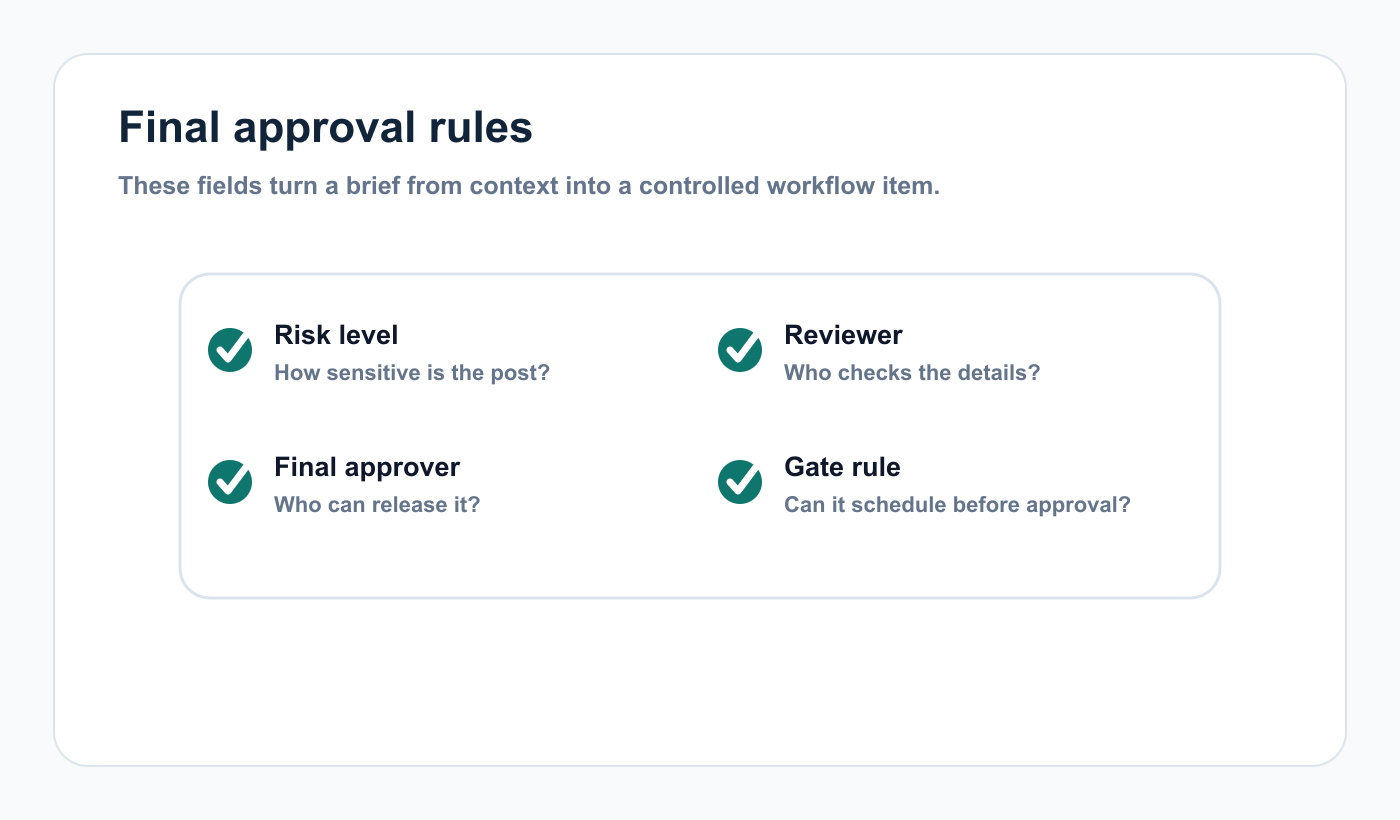
Approval rules make the brief clear enough to route before drafting starts.
Full approval-ready brief template
Copy this template.
## Approval-Ready Content Brief

Title:
Campaign:
Owner:
Due date:

### Goal
What should this content achieve?

### Audience
Who is this for?
What problem are they facing?
What should they understand or do next?

### Platform and Format
Platform:
Format:
Length:
Asset type:

### Core Message
What is the main idea?

### Source Material
Links, screenshots, notes, report insights, customer questions, old posts:

### Brand Voice
Tone:
Words to use:
Words to avoid:

### CTA
Primary CTA:
Secondary CTA:
Link:
UTM / tracking notes:

### Claims and Restrictions
Allowed claims:
Claims to avoid:
Claims needing verification:
Competitor mentions allowed?
Pricing allowed?

### Asset Requirements
Asset owner:
Dimensions:
Reference style:
Usage rights:
Alt text if needed:

### Approval
Risk level:
Reviewer:
Final approver:
Approval deadline:
Publish gate:
Re-approval rule:

### Measurement
Success metric:
Measurement date:
Repurposing potential:
Use this as the default brief for team content, client content, sponsored content, and campaign content.
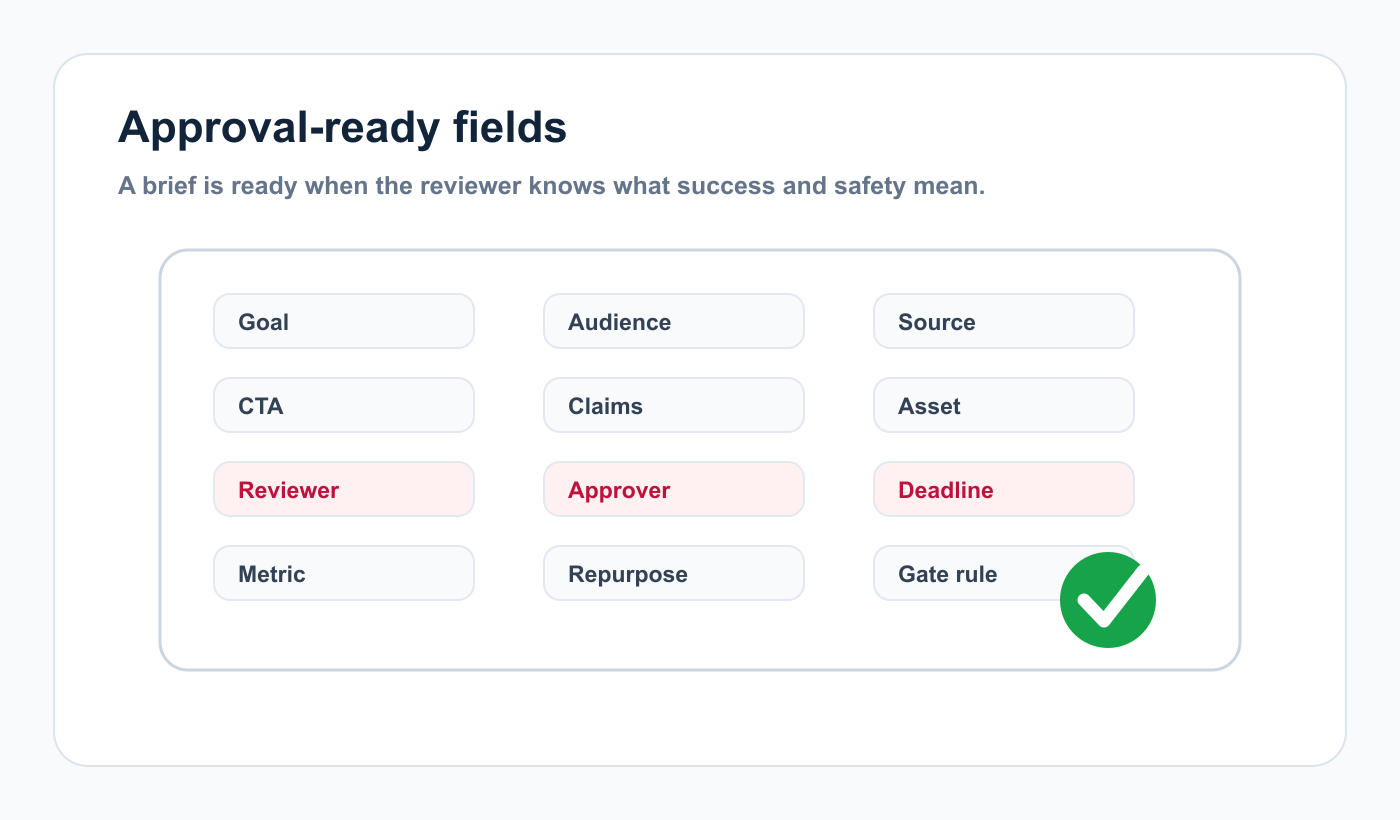
The brief template turns review criteria into fields the team can actually use.
Short version for fast-moving teams
If the team needs speed, use this shorter version.
Goal:
Audience:
Platform:
Format:
Core message:
Source:
CTA:
Asset needed:
Risk level:
Reviewer:
Approver:
Deadline:
Success metric:
Repurposing potential:
This is still much better than a vague content request.
Example: SaaS feature post brief
Title:
Approval gates prevent wrong-version publishing

Goal:
Educate social media managers and drive traffic to the approval workflow article.

Audience:
Small teams and agencies that struggle with client approval.

Platform:
LinkedIn

Format:
Text post

Core message:
A calendar date does not mean a post is ready. Approval state matters.

Source:
Approval matrix article and customer feedback about client review delays.

CTA:
Compare approval workflows.

Claims:
Do not mention pricing. Avoid naming competitors.

Reviewer:
Product marketing

Final approver:
Marketing lead

Success metric:
Clicks and saves

Repurposing:
Turn into Instagram carousel if saves are above baseline.
This gives the writer, reviewer, and approver the same context.
How Tareno fits approval-ready briefs
Tareno is useful when briefs need to become workflow items.
Relevant Tareno components include:
content boards
content calendar
approval workflows
team/client workspaces
roles and permissions
activity visibility
repurposing queue
analytics
workflow builder
AI captions and hashtags
Make integration
n8n integration
API access
Brief fields can map directly to board fields, labels, owners, approval states, and reporting tasks inside a social media workflow builder.
This turns the brief into an operational item.
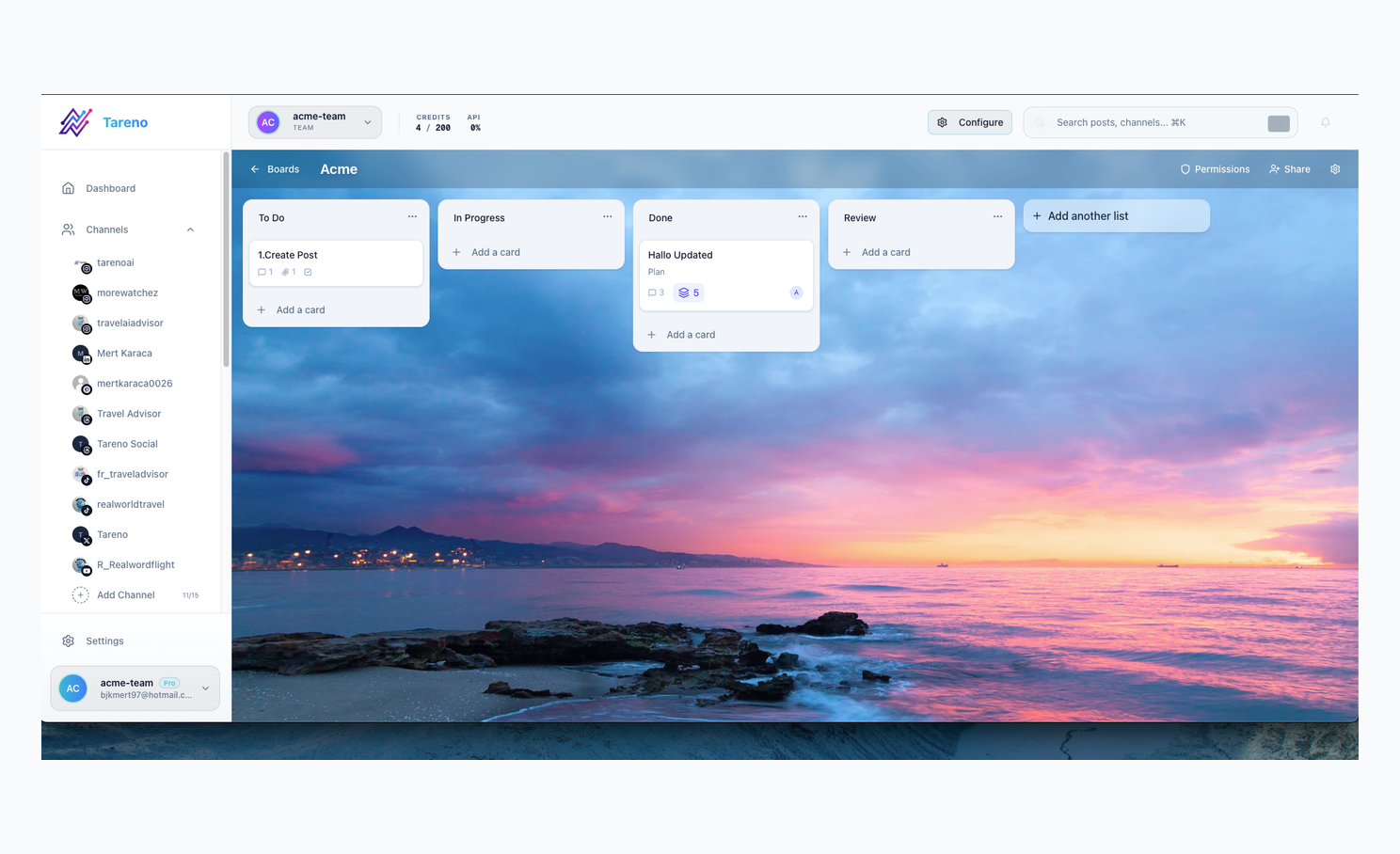
Brief fields work best when they become board fields, owners, and review states.
Common mistakes
Mistake 1: No approval owner
Someone must own final approval.
Mistake 2: No claim rules
Claims should be defined before drafting.
Mistake 3: No CTA
A post without a next action is harder to measure.
Mistake 4: No source material
Writers should not invent context.
Mistake 5: Brief is not connected to workflow
The brief should become a task, board item, or scheduled content item.
Mistake 6: No repurposing note
A good brief should say whether the content could be reused later.
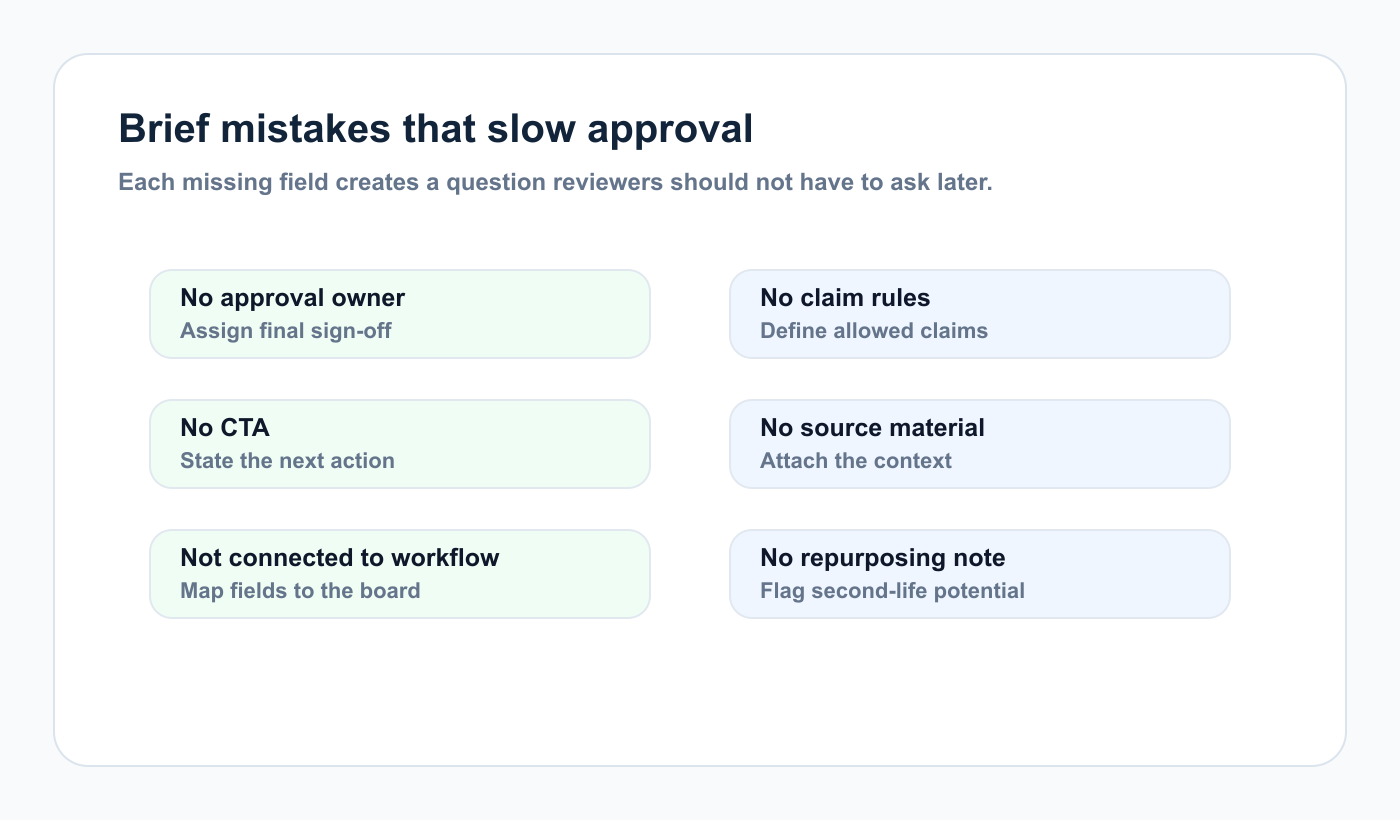
Approval-ready briefs prevent reviewers from rediscovering missing context later.
Related Tareno resources
Keep the workflow moving
Feature Post Scheduling Move approval-ready posts into the calendar with less rework. Open scheduling -> Tool Instagram Caption Generator Use a complete brief to generate cleaner caption options. Try tool -> Feature Analytics & Reports Connect brief goals to the metrics reviewed after publishing. Explore reports -> Workflow Content Repurposing Flag strong briefs for future channel adaptations. View workflow ->
FAQ
What is an approval-ready content brief?
It is a content brief that includes the goal, audience, source material, execution details, claim rules, reviewer, final approver, and approval deadline before drafting begins.
Why do content briefs need approval rules?
Approval rules prevent content from being drafted, reviewed, or scheduled without knowing who needs to sign off and what makes the post safe to publish.
What should a content brief include?
It should include goal, audience, platform, format, core message, source material, brand voice, CTA, claims, asset requirements, approval rules, and measurement.
Should repurposed content need a brief?
Yes, but it can be lighter. Repurposed content should still define source, platform, CTA, freshness review, and approval requirements.
Can AI help write content from a brief?
Yes. AI can create drafts, hooks, and platform versions from a brief. Human review should still check accuracy, voice, claims, and CTA.
How do briefs connect to workflow tools?
Brief fields can become board fields, owners, labels, approval states, calendar items, reporting tasks, and repurposing queue entries.
Final thoughts
A good brief makes approval easier before content is even drafted.
It gives the writer context, the designer direction, the reviewer criteria, and the approver clarity.
Do not treat the brief as paperwork.
Treat it as the first workflow step.
Primary CTA: Explore Tareno features to see how boards, approvals, calendar, activity visibility, repurposing queue, workflow builder, Make, n8n, API, and AI captions turn briefs into publishable content.\n