TL;DR
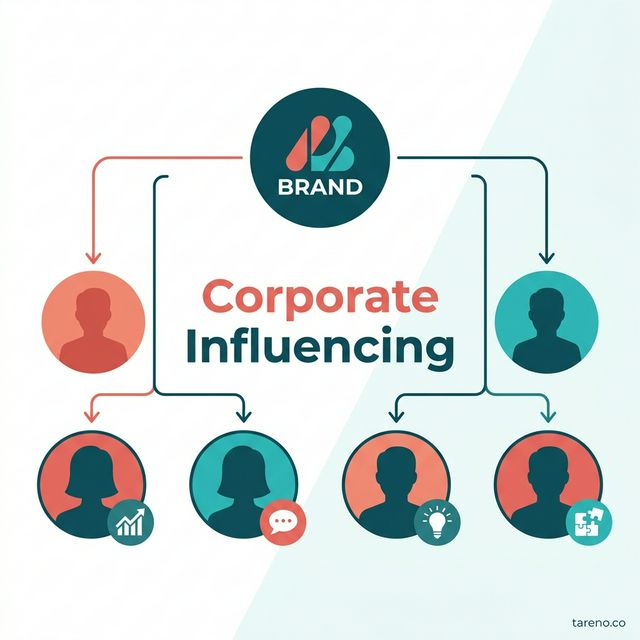
A corporate influencer program is not a request for employees to post more. It is a structured system for making selected internal experts visible around clear themes.
The key difference from employee advocacy is authorship: corporate influencers build a recognizable point of view instead of only amplifying brand content.
The best programs combine voluntary participation, practical guardrails, and a repeatable workflow for capturing internal expertise.
Early success is easier to judge through consistency, topic clarity, and conversation quality than through vanity metrics alone.
Team management matters when multiple contributors and reviewers need clear roles, ownership, and visibility.
Quick Definition
Corporate influencing is a structured program in which selected employees build visible expert authority around specific topics so the company earns trust through people as well as through its brand. Unlike basic employee advocacy, the goal is not only to share company content. The goal is to help the right people become credible, recognizable voices in relevant subject areas.
Why Corporate Influencing Matters for B2B Teams
Corporate influencing matters most in B2B because buyers usually do not make fast, low-context decisions. They compare options, evaluate expertise, and look for signs that a company understands the category deeply. A company brand can create awareness, but visible people often make that expertise easier to trust.
That does not mean every employee should become a public creator. In fact, broad participation is often the wrong starting point. The better approach is to identify a small number of people with genuine proximity to useful topics. A founder may comment on market shifts. A sales lead may explain recurring objections in demos. A product lead may unpack common implementation mistakes. A customer success manager may turn repeated onboarding questions into practical lessons.
A simple example shows the difference. Imagine a sales lead who regularly shares what serious buyers misunderstand during the evaluation process and how to think through those questions. That content feels more useful than another polished company update because it starts with real-world pattern recognition. The brand still benefits, but it benefits through expertise rather than through repetition.
For B2B teams, that is the real opportunity: turning everyday operational knowledge into visible market credibility.
Corporate Influencing vs. Employee Advocacy vs. Influencer Marketing
These models are often mixed together, but they solve different problems.
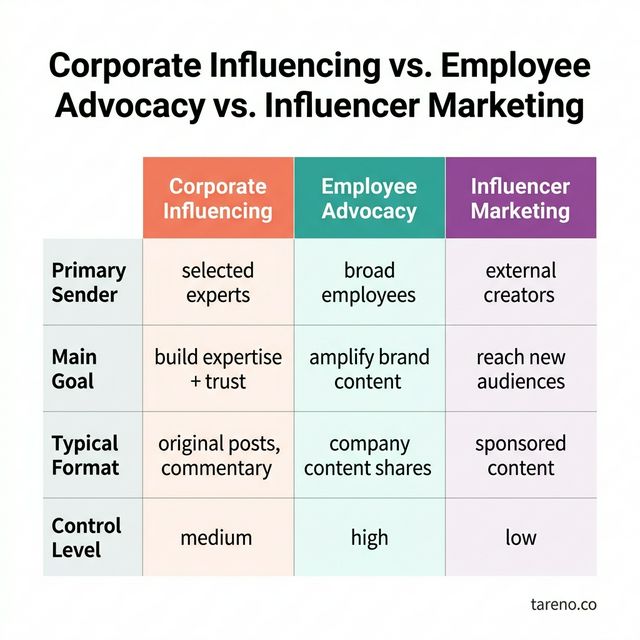
Corporate influencing focuses on selected experts building credibility — structurally different from broad employee advocacy or external campaigns.
Employee advocacy is usually simple: the company creates content and asks employees to share it. The goal is amplification. The risk is low because the wording is controlled centrally. But the impact is also often low because buyers quickly recognize corporate templates instead of authentic insight.
Corporate influencing works differently. The sender is usually a selected expert, not a broad group of employees. The format is original commentary, observations, or real-world problem-solving—not just sharing a prepared link. The goal is establishing deep credibility rather than maximizing reach. And because the content is original, the need for sensible governance is higher.
Influencer marketing, by contrast, relies on external creators with established audiences. The brand essentially rents attention rather than building it internally.
Governance Without Killing Credibility
When employees start publishing their own thoughts, legal and compliance teams naturally get nervous. The instinct is to review everything. But multi-layer review processes kill momentum. If a post about a conference takes two weeks to approve, the employee will simply stop trying.
The solution is not to remove all guardrails, but to clarify them so decisions happen quickly.
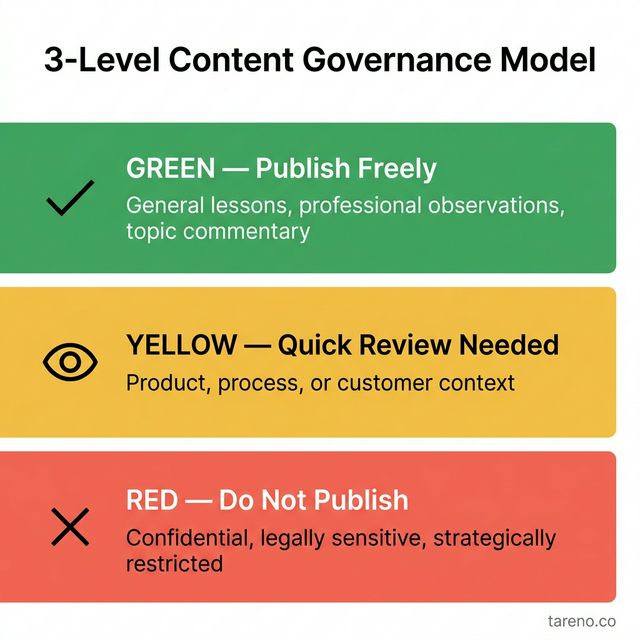
Clear decision logic replaces vague anxiety — employees know what category their post belongs to before they even draft it.
A traffic-light model works well here.
Green content includes general industry observations, leadership lessons, or commentary on public trends. These posts do not need review. The employee publishes them freely.
Yellow content touches on specific product features, customer problems, or internal workflows. These need a quick review—usually just a second pair of eyes from a peer or a manager to ensure nothing sensitive is exposed.
Red content involves unreleased features, financial data, specific client names (without permission), or controversial stances. These require formal approval or are simply off-limits.
Clear decision logic replaces vague anxiety. When employees know exactly what bucket their idea falls into, they can write with confidence.
Why Pilot Programs Beat Big Rollouts
Companies often launch advocacy programs by inviting 100 people at once. That usually leads to a brief spike in activity followed by silence. Corporate influencing runs better as a focused pilot.
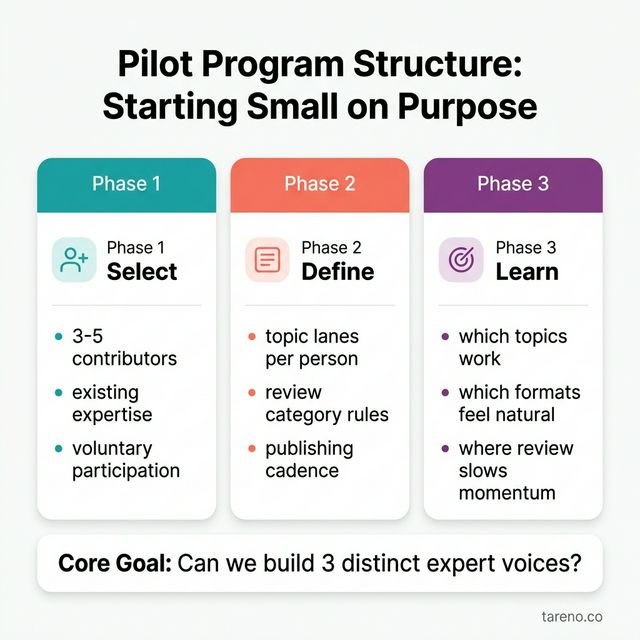
A structured pilot answers one clear question: can we build 3 distinct expert voices on topics that matter to our category?
A pilot is better because it creates sharper learning. With three to five visible experts, you can see which themes work, which formats feel natural, and where governance slows the system. You can also learn which people actually enjoy the role and which are better contributors behind the scenes.
A smaller pilot improves coaching quality too. Instead of asking everyone to become a creator, the company can help a focused group develop a real point of view. That usually produces stronger content and more credible positioning.
The best pilots have one clear learning goal. For example: Can we build three distinct expert voices around topics that matter to our category? That is a better starting question than asking how to make the whole company post more.
What to Measure Without Falling Into KPI Theater
Measurement becomes distorted when teams jump straight to hard ROI debates before the program is even stable. A better approach is to measure maturity in layers.
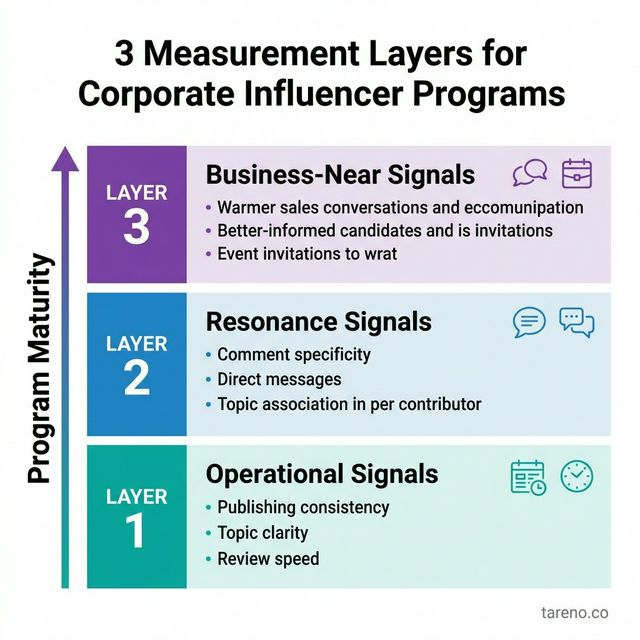
Measure in layers — operational consistency first, resonance signals next, business-near signals only once the program is stable.
1. Operational signals
Are people publishing consistently enough to be visible? Are topic lanes clear? Does review move quickly enough to keep momentum alive?
2. Resonance signals
Are comments becoming more specific? Are follow-up conversations or direct messages appearing? Are people starting to associate each contributor with a useful topic?
3. Business-near signals
Once the program is more mature, you can ask whether sales conversations feel warmer, whether candidates arrive better informed, or whether invitations to relevant conversations increase.
The point is not to avoid measurement. It is to avoid pretending that early thought-leadership work should behave like direct-response advertising.
Common Mistakes That Make Programs Unusable
Forced participation
Employees should not be treated like mandatory distribution channels. That usually produces generic, risk-averse content.
Ghostwritten sameness
Templates can help, but a fully centralized voice makes everyone sound interchangeable. Support should provide structure, not synthetic personality.
Topic sprawl
If every contributor talks about everything, no one becomes memorable. Narrower topic lanes are usually more effective.
Too many approvals
Multi-layer review often kills momentum without improving quality. Review should be reserved for genuinely sensitive categories.
Vanity-metric obsession
A few spikes in visibility do not prove the program is working. The deeper question is whether people are becoming known for useful expertise.
FAQ
How many corporate influencers does a mid-sized B2B company need?
Usually fewer than people expect. A small pilot of three to five contributors is often enough to test themes, workflow, and support needs.
Does every employee need to be active on LinkedIn?
No. The goal is not universal participation. The goal is fit. Some employees are better as visible experts, while others contribute ideas, examples, or raw insight behind the scenes.
How much wording freedom is realistic?
As much as possible within clear guardrails. Good guidelines define risk boundaries and escalation paths without flattening everyone into the same voice.
Which KPIs make sense at the beginning?
Start with consistency, topic clarity, review speed, conversation quality, and signs that each contributor is becoming associated with a distinct area of expertise.
Do you need special software?
Not on day one. Strategy, topic ownership, and workflow clarity matter first. Software becomes more useful when multiple contributors and reviewers need clear roles and visibility.
What if compliance teams are nervous?
Use categories instead of blanket control. Separate low-risk, review-needed, and restricted content so the system stays safe without becoming unworkable.
Quotable Passage
Corporate influencing works best when the right people become known for the right topics under light but reliable guardrails. The program succeeds not because everyone sounds the same, but because each credible voice makes the brand easier to trust.
Key Takeaways
A corporate influencer program is an operating model for expert visibility, not just a push for more employee posting.
The real difference from employee advocacy is topic ownership and recognizable authorship.
Strong programs start with a small pilot, clear lanes, and practical guardrails.
The best content usually comes from expertise already present in sales, product, customer success, leadership, and hiring workflows.
Team management helps when coordination, review, and ownership become operational bottlenecks.