Buffer Alternative: A Better Workflow-First Option for Teams That Need More Than Simple Scheduling
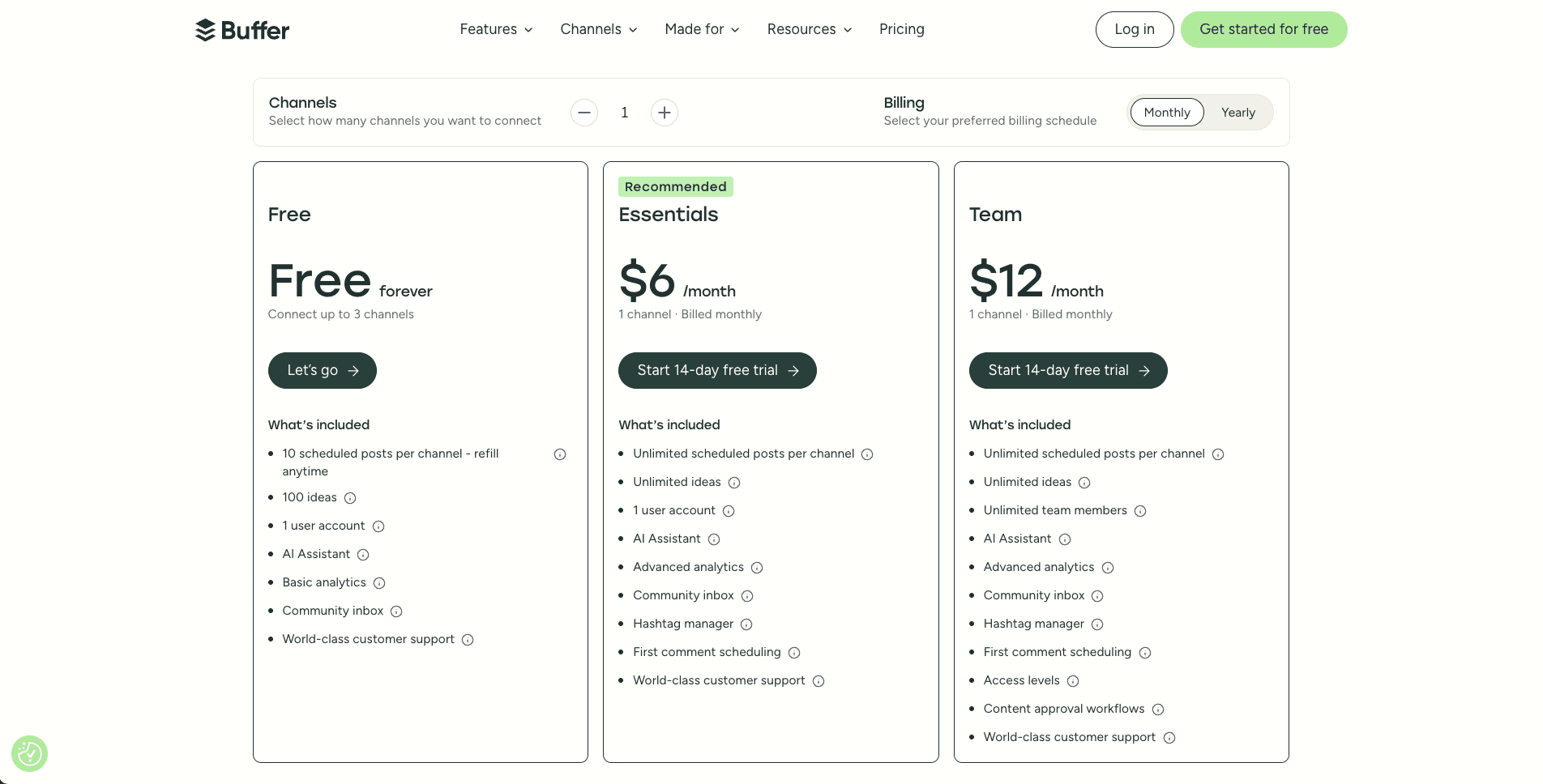
Buffer is a strong social media scheduling tool if your main priority is simple publishing, clean queues, per-channel pricing, lightweight analytics, basic engagement, and an easy tool for creators or small teams. But if you are looking for a Buffer alternative because your team needs workflow automation, repurposing, boards, approvals, roles, activity visibility, API access, Make workflows, or n8n workflows, Tareno may be a better fit.
One-line value proposition: Tareno is a Buffer alternative for creators and teams that have outgrown simple scheduling and now need workflow automation, repurposing, approvals, boards, and operational visibility.
Why teams look for a Buffer alternative
Teams usually do not look for a Buffer alternative because Buffer is bad. They look because Buffer’s biggest strength is simplicity, and their workflow is no longer simple.
Common switching triggers include:
- scheduling is easy, but planning is fragmented
- approvals happen in chat or spreadsheets
- high-performing posts are not reused systematically
- the team needs board stages for production
- social media work now involves multiple people
- roles and activity visibility matter
- Make or n8n workflows are disconnected from scheduling
- publishing should trigger follow-up actions
- one idea needs to become multiple platform-specific posts
- the team needs automation, not only queues
Buffer is strong when the question is:
“How do we publish consistently with the least complexity?”
Tareno is stronger when the question is:
“How do we run the full content workflow from planning to repurposing and automation?”
Where Buffer is still the better choice
Buffer can still be the better choice if simplicity is the main goal.
Choose Buffer if you only need simple publishing
Buffer is one of the clearest tools for simple scheduling. If your workflow is write post → add to queue → schedule → publish → review performance, Buffer may be the better option.
Choose Buffer if per-channel pricing is easier
Buffer’s pricing model is easy to understand for small setups. It can be useful if you manage only a few channels and do not need a deeper workflow system.
Choose Buffer if the team wants low friction
Buffer can be better if your main priority is quick setup, simple publishing, queue scheduling, basic team collaboration, lightweight analytics, and minimal training.
Where Tareno is the better Buffer alternative
Tareno becomes the better alternative when the team has outgrown simple scheduling.
1. Tareno is stronger for repurposing
Buffer helps schedule new posts. Tareno helps teams reuse existing content more systematically. Tareno’s repurposing queue helps teams reuse high-performing posts, turn one idea into multiple platform versions, schedule future content reuse, keep evergreen content active, adapt captions per platform, and reduce manual rewriting.
2. Tareno is stronger for workflow automation
Tareno supports workflow logic such as triggers, delays, approval-based actions, publishing actions, repurposing actions, API workflows, Make integration, and n8n integration.
3. Tareno is stronger for boards and team workflows
Tareno supports board-based social operations. That matters if your content moves through idea, draft, review, approved, scheduled, published, repurpose, and report stages.
4. Tareno is stronger for roles and activity visibility
As soon as multiple people touch social content, visibility matters. Tareno helps teams know who changed content, who moved content, who approved content, what is waiting, and what should be repurposed.
Who should choose Buffer?
Choose Buffer if you need simple publishing, queue scheduling, per-channel pricing, low learning curve, lightweight analytics, simple team collaboration, content approval workflows on Team, and a tool that gets out of the way.
Who should choose Tareno?
Choose Tareno if you need workflow builder, repurposing queue, content boards, team workspaces, approval workflows, roles and permissions, activity visibility, competitor analysis, unified analytics, AI captions and hashtags, API access, Make integration, and n8n integration.