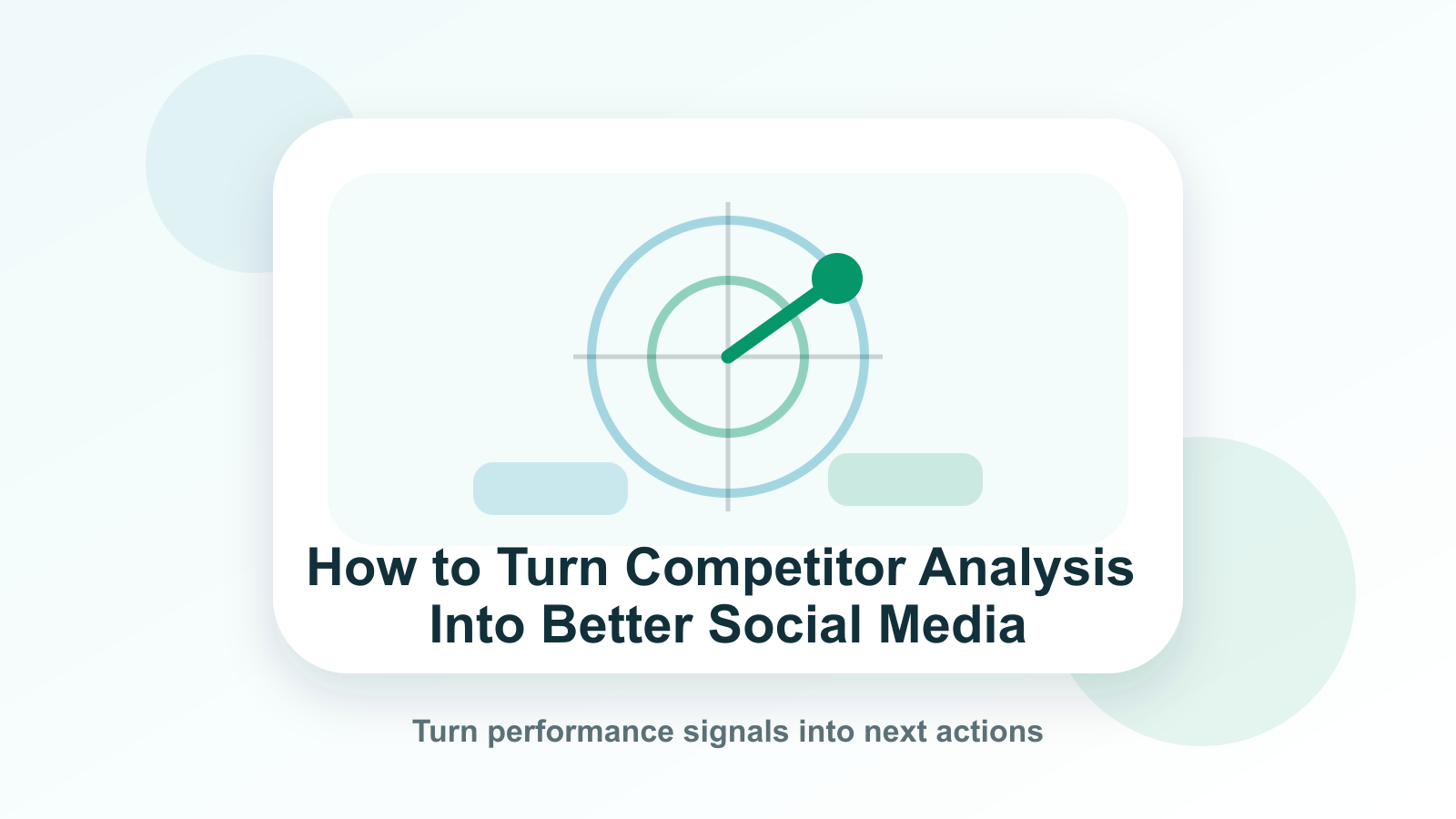
Competitor analysis is not about copying the loudest account in your niche.
The next visual adds the practical layer behind this point: framework for choosing what to keep, change, repurpose, or stop.
That is the weak version.
A useful competitor analysis workflow helps you understand what your audience already responds to, where the market is crowded, which questions are still unanswered, and which formats deserve a better execution from your brand.
The goal is not to clone a competitor's post. The goal is to extract the audience intent behind that post and turn it into a stronger content decision.
A high-performing competitor post can become a clue. A repeated topic can become a content cluster. A weak explanation can become your better tutorial. A recurring comment can become a short-form video. A format pattern can become a test for your next campaign.
But this only works when competitor analysis is connected to a workflow. If it ends as a screenshot folder, it will not change what your team publishes.
TL;DR
A strong competitor analysis workflow turns external signals into internal action.
The process is simple:
Spot the signal.
Interpret the audience intent.
Find the content gap.
Create a differentiated angle.
Assign the idea into a real workflow.
Learn from the result after publishing.
The rule that keeps the process honest is this:
Do not copy competitor content. Extract the audience intent and create a better, more specific version.
That one shift changes competitor analysis from a reactive habit into a repeatable content strategy.
What competitor analysis actually means for social content
Social media competitor analysis is the practice of studying competitor content to understand what is working, what is missing, and what your shared audience may care about next.
It can include topics, hooks, formats, captions, thumbnails, posting frequency, comments, saves, shares, video structure, calls to action, creator collaborations, visual style, and search visibility.
The mistake is treating those observations as instructions.
Weak output sounds like this:
Competitor X posted this, so we should post the same thing.
Useful output sounds like this:
Competitor X is getting attention around this topic. Here is the audience intent, here is what their content missed, and here is our better angle.
That difference matters because social feeds punish sameness. If your team arrives late with the same hook, same claim, and same format, you are not creating strategy. You are creating noise.
Good competitor analysis separates surface from signal. The surface is the post itself. The signal is the reason it worked.
A carousel about social media hooks may work because people want examples they can adapt quickly. A founder video may work because the audience trusts first-person experience. A comparison post may work because buyers feel stuck between tools. A short tutorial may work because the competitor made a complex process feel easy.
Once you know the reason, you can create something sharper than the original.
Why competitor analysis often fails
Most teams do competitor research in bursts. Someone notices a viral post, drops it into Slack, adds a comment like "we should do something like this," and the idea disappears.
That pattern fails for five reasons.
Teams collect screenshots but never interpret them
A folder of competitor screenshots is not a strategy. It is raw material. Without interpretation, your team still has to guess what the screenshot means and what to do next.
Teams copy instead of differentiate
Copying makes your content weaker because you arrive after the moment. You also train your audience to see your brand as interchangeable.
Differentiation does not mean ignoring what works. It means using the market signal as the starting point, then adding a stronger opinion, better structure, clearer example, deeper data, or more useful workflow.
Teams only look at likes
Likes are easy to see, but they are not the whole story. Comments reveal objections and questions. Shares reveal identity and usefulness. Saves reveal future intent. Clicks reveal commercial relevance. Watch time reveals whether the hook and pacing held attention.
A post with fewer likes but many detailed comments may be a better content opportunity than a post with shallow engagement.
Teams ignore audience intent
A post is rarely successful because of the exact wording alone. It succeeds because it matches a need, fear, curiosity, ambition, or unresolved decision.
When you interpret the intent, you stop asking, "How can we make our version of this post?" and start asking, "What does this prove the audience wants next?"
Teams do not connect insights to workflow
This is the biggest leak. If an insight does not become a task, post, experiment, page, or repurposing action, it disappears.
Competitor analysis should feed your content operating system. It should create ideas, briefs, drafts, approval tasks, publishing slots, and measurement notes.
The SIGNAL framework
Use SIGNAL to turn competitor analysis into better social media content without copying.
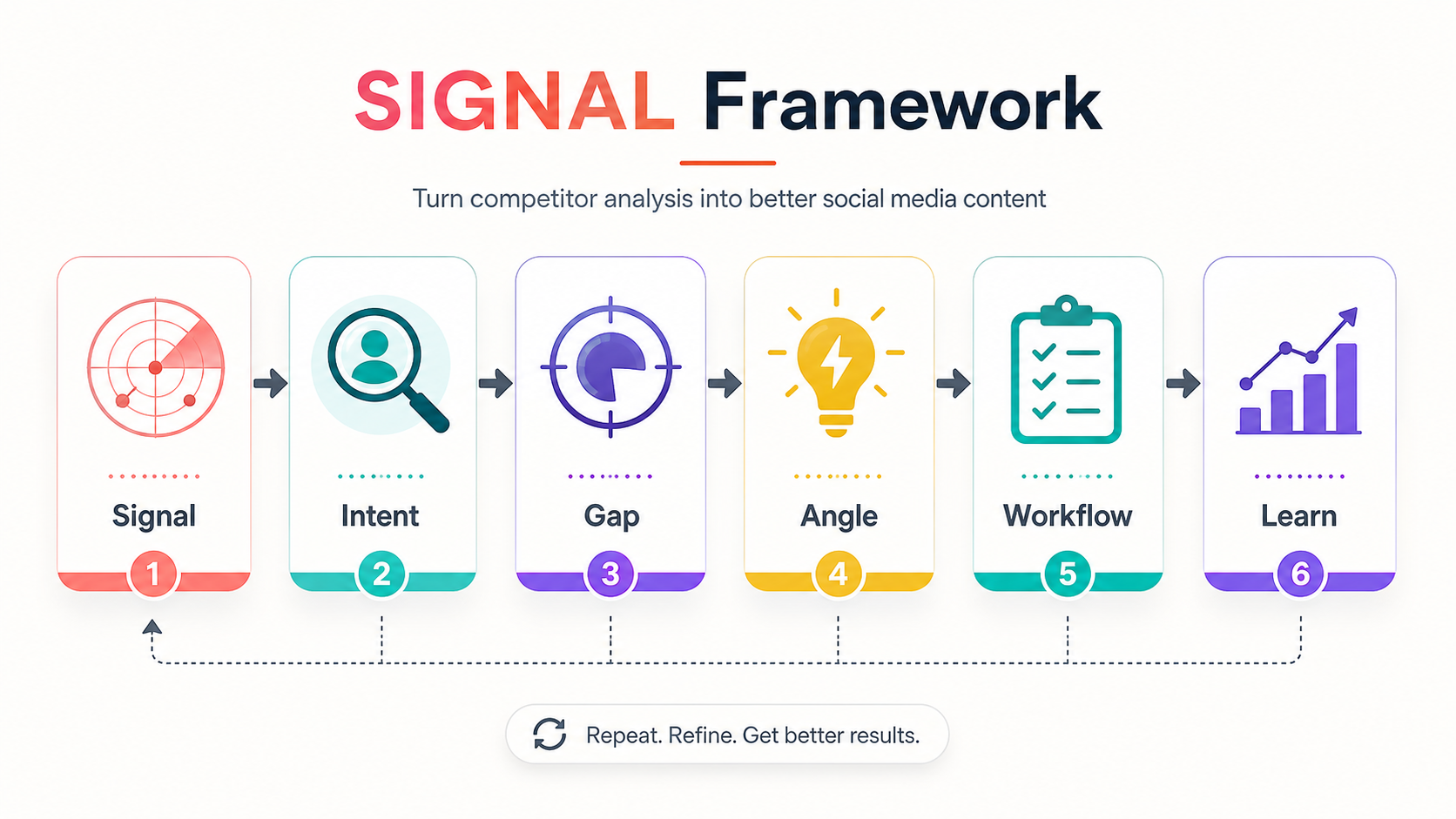
S: Spot the signal
Start by looking for patterns, not random posts.
Useful signals include:
Posts with unusually high saves, shares, or comments
Repeated topics across multiple competitors
Questions that keep appearing in comment sections
Formats that keep returning, such as checklists, teardown videos, or comparison posts
Posts that rank in search or appear in AI answers
Topics competitors explain poorly
Topics competitors avoid entirely
Calls to action that seem to drive comments, clicks, or replies
One viral post may be a fluke. A repeated pattern is more useful.
I: Interpret the intent
Ask why the audience responded.
For example, a competitor post titled "5 content ideas for busy founders" may not be about the five ideas. The real intent may be speed, relief, and the fear of falling behind.
That gives you multiple better angles:
A weekly founder content system
A 30-minute batching workflow
A teardown of what makes a founder post trustworthy
A checklist for turning one customer question into five posts
The competitor showed demand. Your job is to create the better answer.
G: Gap the content
A content gap is not just a missing topic. It can be a missing depth, format, proof, example, workflow, audience segment, or point of view.
Ask:
What did the competitor simplify too much?
What did they not prove?
Which audience did they ignore?
What next step did they fail to explain?
Which platform context was missing?
Could this become a better carousel, video, thread, or blog section?
A weak competitor post can be more useful than a strong one because it shows demand without fully satisfying it.
N: New angle
The new angle is where strategy becomes creative.
Do not change the wording slightly. Change the value.
You can differentiate by adding:
A sharper opinion
A narrower audience
A stronger example
A before-and-after structure
A data-backed argument
A workflow template
A comparison matrix
A platform-specific execution
A contrarian but useful point of view
If a competitor says, "Post more consistently," your better angle might be, "Build a repost queue so consistency does not depend on daily motivation."
If a competitor says, "Use hooks," your better angle might be, "Match hook types to audience awareness: problem-aware, solution-aware, and brand-aware."
The angle should make the reader feel that your version is more specific, more useful, or more credible.
A: Assign workflow
A good insight needs an owner and a next step.
Turn each useful signal into one of these workflow items:
A content idea
A draft brief
A platform-specific post
A video script
A carousel outline
A blog section
A comparison page
A repurposing task
A test hypothesis
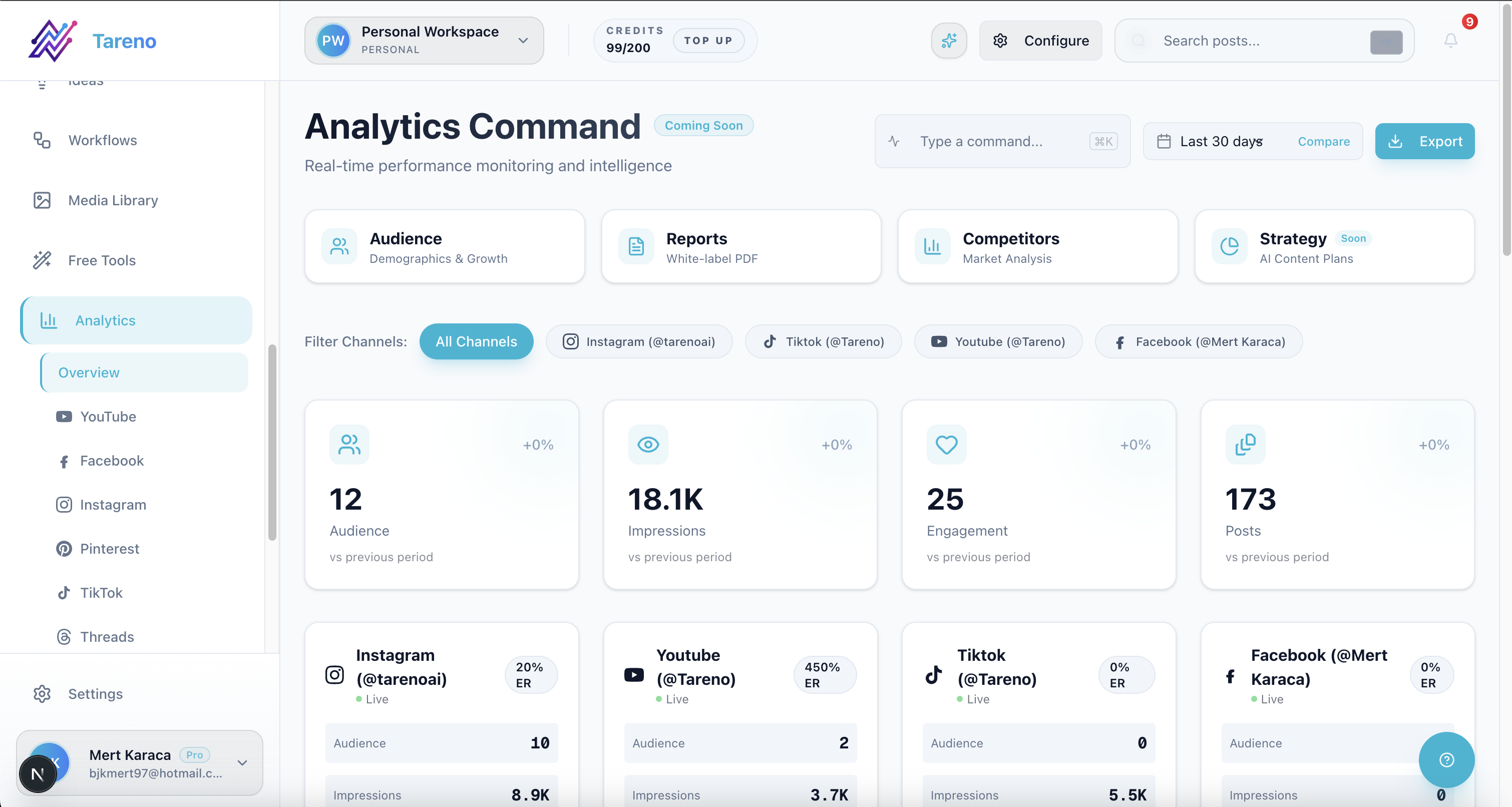
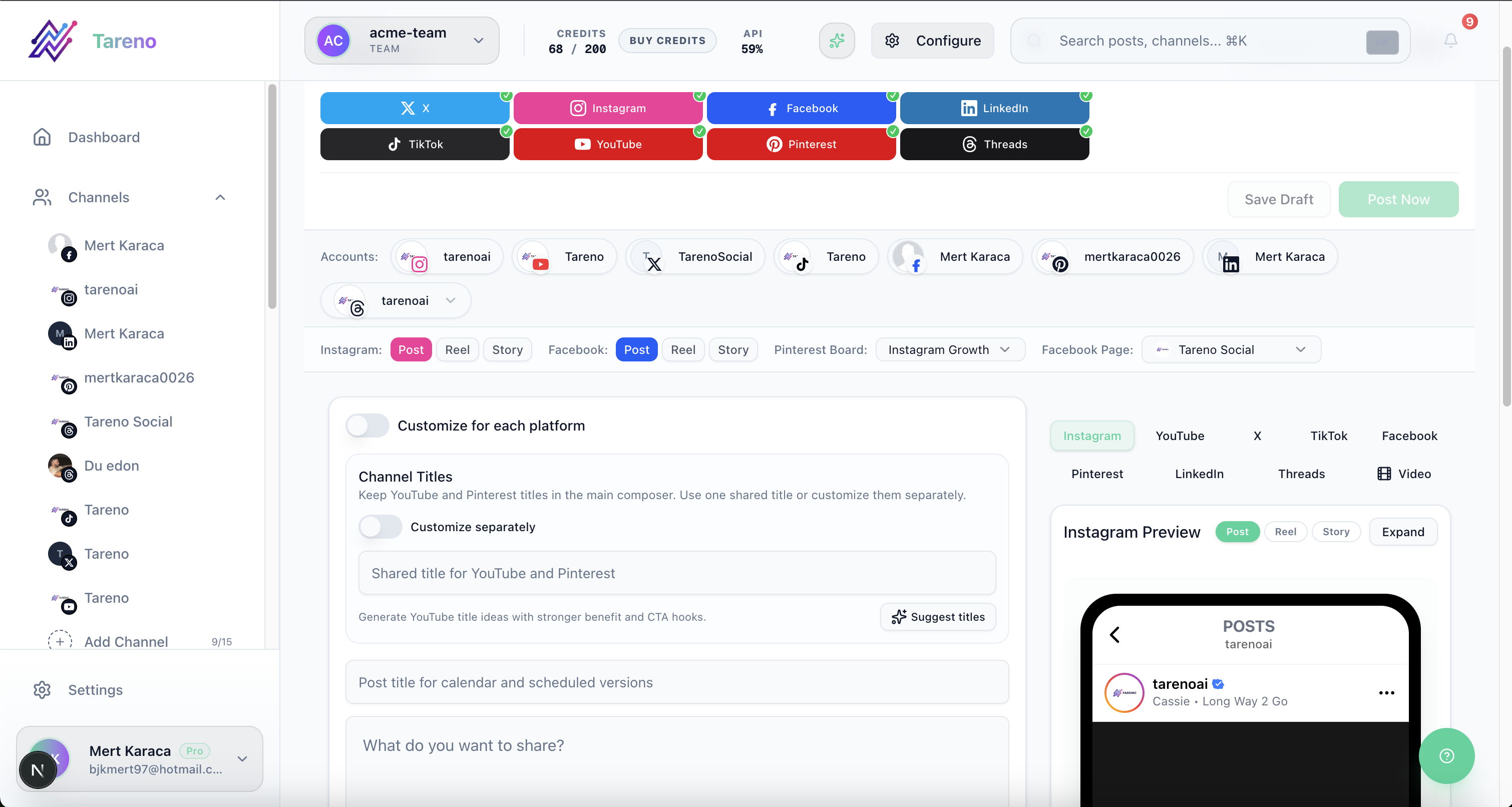
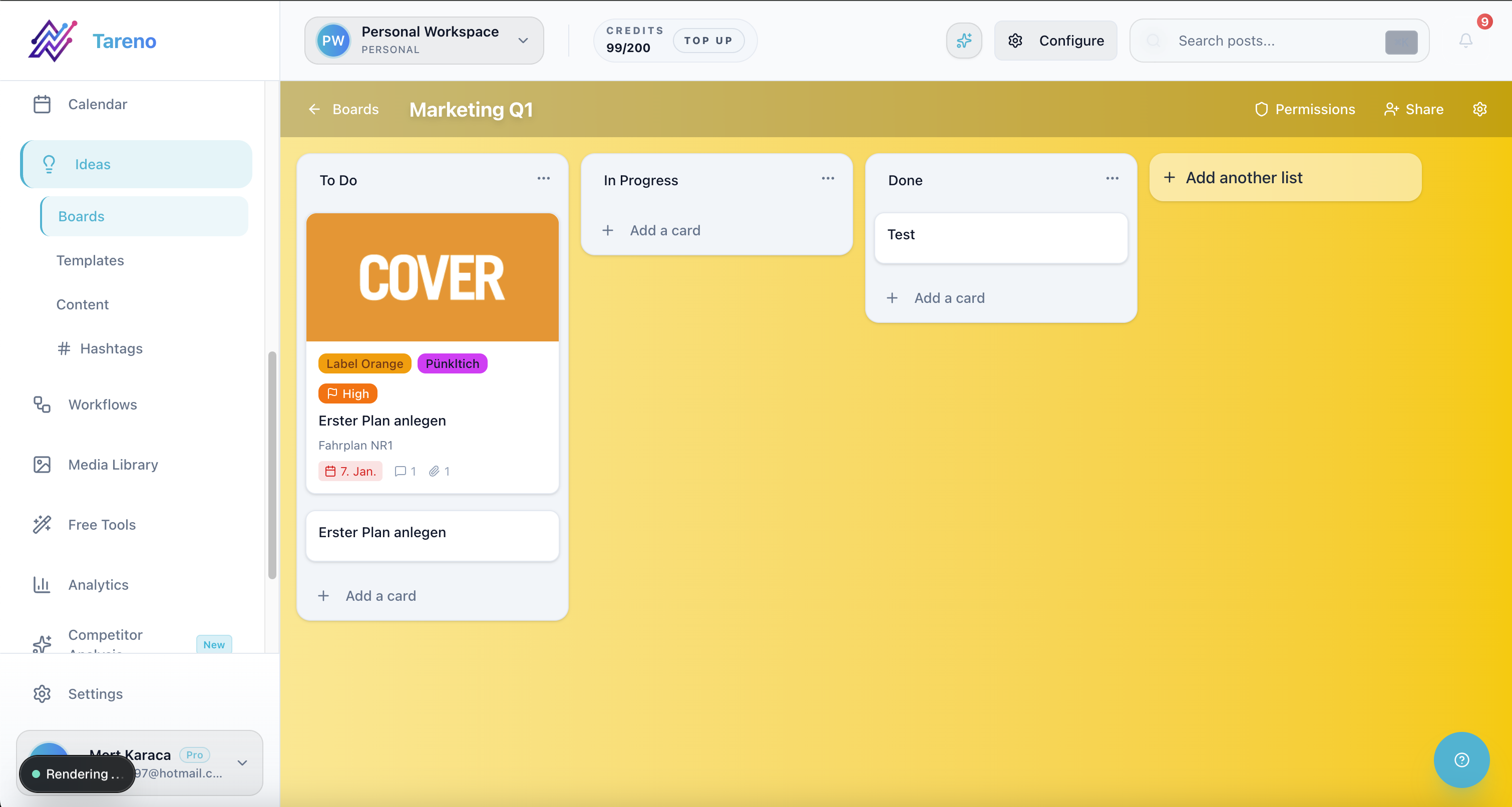
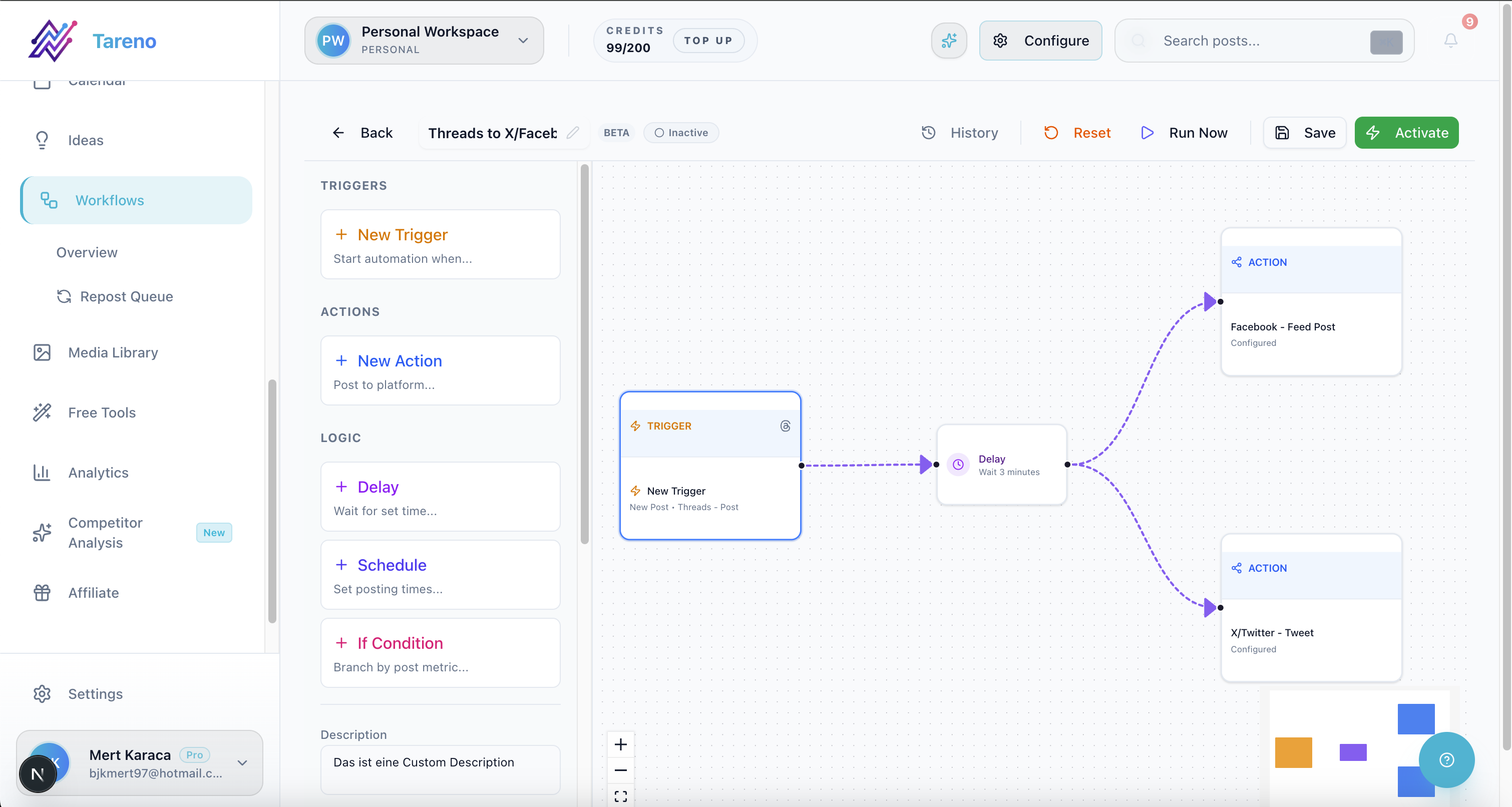
This is where tools matter. If competitor insights live in one place and publishing happens somewhere else, the workflow breaks. In Tareno, the cleaner path is to move from insight to idea board, from idea board to draft, from draft to calendar, and from calendar to performance review.
L: Learn from results
After publishing, compare the result against your hypothesis.
Do not only ask whether the post performed well. Ask what you learned:
Did the new angle outperform the copied surface pattern?
Did comments confirm the audience intent?
Did saves or shares show deeper usefulness?
Did the post create follow-up questions?
Should the idea become a series?
Should it be repurposed into another platform format?
The best competitor analysis system improves over time because every published post becomes new data.
How to turn one competitor signal into five content assets
Here is a practical example.
Imagine three competitors are getting attention around the same theme: "AI content calendars."
A shallow response would be to post your own generic AI calendar tip.
A stronger workflow looks like this.
1. Identify the shared audience problem
The audience is probably not asking for AI in isolation. They want fewer blank-page moments, faster planning, and a content calendar that does not become stale after one week.
2. Find the gap
Many posts explain how to generate ideas. Fewer explain how to review, approve, schedule, and reuse those ideas without creating chaos.
3. Create a differentiated angle
Your angle could be:
An AI content calendar is only useful when it is connected to approvals, scheduling, and repurposing.
That angle is stronger because it moves from novelty to operations.
4. Build a small content cluster
From one signal, you can create:
LinkedIn post: why AI calendars fail without workflow
Instagram carousel: 5 checks before adding AI ideas to your calendar
TikTok/Reels script: the difference between idea generation and content operations
Blog section: how to connect AI ideas to approval and publishing
Product-led post: how a queue keeps approved ideas moving
5. Route it through a real process
Assign owner, format, due date, approval step, publishing slot, and measurement note. Otherwise, the insight stays theoretical.
What to track in a competitor analysis sheet
You do not need a complicated database to start. You need the right fields.
Track these columns:
FieldWhy it mattersCompetitorShows where the signal came fromPlatformContext changes by channelPost URL or screenshotKeeps the source easy to reviewTopicHelps identify repeated clustersFormatReveals patterns such as carousel, short video, thread, or tutorialHookShows how the post earned attentionVisible engagementGives a rough performance signalComment themesReveals objections, questions, and languageAudience intentExplains why the post workedContent gapDefines the opportunityOur anglePrevents copyingNext actionTurns research into executionOwnerCreates accountabilityResultCloses the learning loop
The most important columns are not competitor, platform, or engagement. They are audience intent, content gap, our angle, and next action.
Those columns force strategy.
Common mistakes to avoid
Competitor analysis is useful only when it makes your content sharper. These mistakes move it in the opposite direction.
Copying hooks word for word
Hooks are easy to copy and easy to recognize. If the structure is useful, adapt the logic, not the wording.
Treating every competitor as equal
Some competitors have a different audience, price point, brand voice, or content goal. Track competitors that share enough context to teach you something useful.
Ignoring small accounts
Small accounts can reveal emerging topics faster than large brands. A smaller account with unusually strong comments may be closer to the audience than a polished enterprise brand.
Confusing frequency with strategy
A competitor posting three times a day does not prove you should. It may prove they have a larger content team, weaker quality control, or a different business model.
Forgetting your own positioning
If every competitor signal pulls you away from your core message, your content becomes inconsistent. Use competitor analysis to sharpen your positioning, not replace it.
A simple weekly workflow
You can run this process once a week without turning it into a heavy research project.
Monday: collect signals
Review five to ten competitor posts across your priority platforms. Save only posts that show a meaningful signal.
Tuesday: interpret and group
Group posts by topic, format, audience intent, and content gap. Look for repeated patterns.
Wednesday: choose angles
Pick three to five angles your brand can own. Make them more specific than the competitor examples.
Thursday: draft and approve
Turn the strongest angles into platform-specific drafts. Add approval notes before the post reaches the calendar.
Friday: schedule and define the test
Schedule the posts and write the hypothesis. For example: "This carousel should drive saves because it gives a reusable checklist."
Next week: review the result
Compare performance against the hypothesis, then decide whether to repurpose, iterate, or drop the angle.
A weekly rhythm is enough for most teams. The point is consistency, not endless monitoring.
Final thoughts
Competitor analysis should make your content more original, not less.
The best teams do not copy competitors. They study the market to understand what the audience is trying to solve, then build a clearer, stronger, more useful answer.
That requires a workflow. You need a place to collect signals, a way to interpret intent, a system for turning insights into drafts, and a review loop that teaches the team what worked.
If you want a practical starting point, connect competitor insights to your content planning board, your publishing calendar, and your analytics review. That creates a loop: observe, interpret, create, publish, learn, and repurpose.
That is how competitor analysis becomes better social media content.
FAQ
Is competitor analysis the same as copying?
No. Copying repeats the visible surface of a competitor's post. Competitor analysis studies why the post worked and turns that insight into a differentiated angle.
How often should a team review competitors?
For most teams, once per week is enough. Daily monitoring often creates reactive content. Weekly review gives you enough distance to spot patterns.
Which competitors should I track?
Track direct competitors, audience alternatives, creator-led accounts in your niche, and small accounts with unusually strong engagement. The best signals do not always come from the biggest brands.
What metrics matter most?
Saves, shares, comments, clicks, and watch time usually reveal more than likes. The best metric depends on the post goal.
How do I avoid sounding like competitors?
Document the audience intent, content gap, and your unique angle before drafting. If the angle is not meaningfully different, do not publish yet.