TL;DR
GEO is about making content easier for AI systems to retrieve, interpret, and cite — not about unlocking a secret ChatGPT ranking hack.
The strongest GEO tactics are usually strong editorial tactics: explicit definitions, trustworthy sourcing, scannable structure, and clear decision guidance.
SEO and GEO overlap, but they are not the same job. SEO targets search visibility; GEO targets referenceability inside generated answers.
You can improve your odds of being useful to ChatGPT, but you cannot fully control source selection or answer assembly.
Teams get better GEO outcomes when they build repeatable content systems instead of one-off “AI-optimized” pages.
Quick Definition
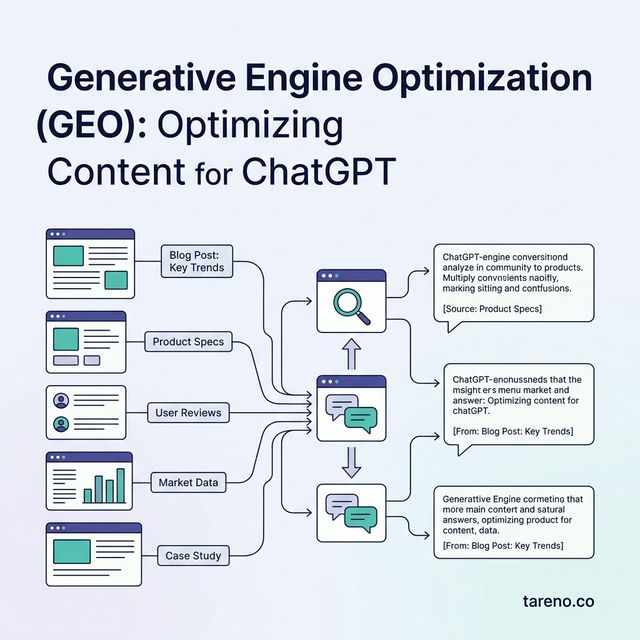
Generative Engine Optimization (GEO) is the practice of shaping content so it is easier for AI systems such as ChatGPT to find, understand, summarize, and potentially cite inside conversational answers. In practical terms, GEO means writing with more explicit definitions, clearer topical boundaries, stronger sourcing, and more answer-ready structure.
That is the useful version of the concept. The hype-heavy version is “ranking in ChatGPT.” That framing is too simplistic. ChatGPT does not behave like a classic ten-blue-links search engine in every context, and publishers do not get a public checklist of stable ranking factors. A safer interpretation is this: GEO improves the eligibility of your content for AI-mediated discovery.
A quick example: compare two articles on the same topic. One opens with a vague thought-leadership paragraph about “the future of content.” The other opens with a 60-word definition, a bullet summary, a comparison table, and a cited process. Even if both are smart, the second article is much easier for a conversational system to parse and reuse.
That is why GEO matters for marketers. It is less about gaming a model and more about removing ambiguity.
Why GEO Matters Now
Discovery no longer happens only on search results pages. Buyers increasingly use conversational systems for first-pass research, comparisons, and workflow questions. In that environment, visibility is no longer just “Did I rank?” It is also “Was my page usable as source material?”
Three things make GEO relevant. First, conversational discovery compresses the research journey. Users ask broad questions and expect a synthesized answer. Second, citation behavior changes the value of content: a source can influence the outcome even without winning a click. Third, referenceability becomes a quality trait. If your page is hard to quote, hard to summarize, or fuzzy about its scope, it becomes weaker input for answer systems.
Mini-example: if someone asks ChatGPT, “What is the best way to repurpose a webinar into blog posts?”, the article most likely to help is not the one with the most abstract branding language. It is the one with a direct definition, a step-by-step workflow, clear trade-offs, and a realistic “when not to do this” section.
This is also where GEO stays grounded. It does not replace SEO. It builds on it. Search visibility, brand authority, and technical hygiene still matter. GEO simply asks an additional question: Is this content structured for machine-assisted explanation, not just for clicks?
The TRACE Framework for ChatGPT-Ready Content
A practical GEO strategy needs more than “write clearly.” Use the TRACE Framework:
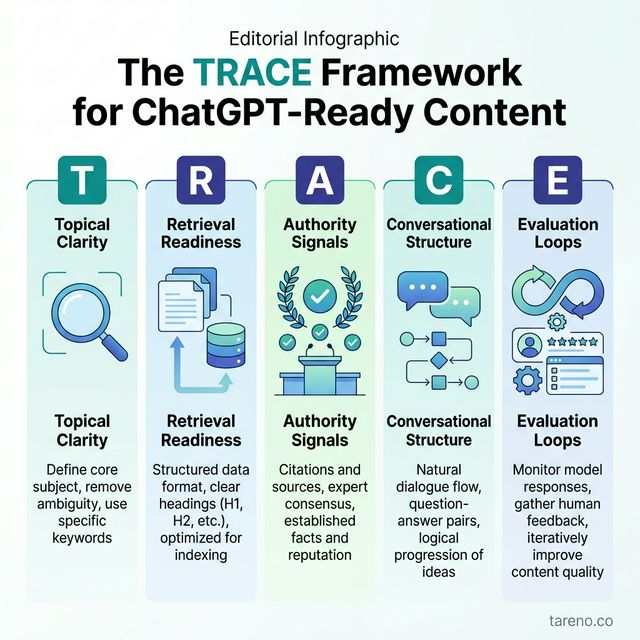
The TRACE framework gives content teams a concrete checklist for making every article retrievable by generative AI engines.
T — Topical Clarity
State exactly what the page covers, for whom, and under which conditions. This reduces ambiguity for both readers and machines.
R — Retrieval Readiness
Put high-value answers where they can be extracted quickly: definition-first paragraphs, descriptive H2s, concise lists, and comparison blocks.
A — Authority Signals
Show why the content should be trusted. That can mean cited sources, transparent assumptions, named methodology, and update dates.
C — Conversational Structure
Write in a way that mirrors how people ask questions: what it is, why it matters, when to use it, when not to, and what to do next.
E — Evaluation Loops
Review whether the content is actually being discovered, referenced, and refreshed. GEO is not “publish once and hope.”
Mini-example: a B2B SaaS team rewrites an article from broad opinion into a page with a quick definition, buyer-stage comparison table, implementation steps, and FAQ. The knowledge is mostly the same, but the second version is far easier for ChatGPT-style answer synthesis.
GEO vs. SEO vs. Generic “AI Content Optimization”
These terms are often blended together, which creates bad strategy.
DimensionGEOSEOGeneric AI content optimizationPrimary goalBe easy to retrieve, summarize, and cite in AI answersRank and win clicks from search resultsProduce content faster with AI assistanceMain unit of valueReferenceabilitySearch visibility and trafficProduction efficiencyKey strengthsClear definitions, trust signals, answer structureIndexing, relevance, authority, technical hygieneSpeed, scale, ideationMain riskOverclaiming how LLMs workChasing rankings without depthPublishing generic outputBest use caseHigh-consideration informational contentBroad search acquisitionDrafting and workflow support
The important distinction is this: SEO optimizes for discovery in search systems; GEO optimizes for usefulness inside generated answers; AI content optimization often optimizes production rather than quality.
Mini-example: a page may rank well in Google because it has authority and links, yet still be poor GEO material if it buries the answer under fluff, never defines terms, and gives no source context. The reverse can also happen: a well-structured niche explainer may be highly quotable in AI contexts even if it is not a classic SEO powerhouse.
What Actually Makes Content More ChatGPT-Ready
There is no public formula for “ranking in ChatGPT,” but several practices are consistently sensible because they improve machine interpretation.
Definition-first writing
Start sections with the answer, not the warm-up. This mirrors how people use conversational tools and makes extraction easier.
Source transparency
Where claims are contestable, show the basis: official docs, primary research, or clearly framed observations. Unsupported certainty is weak source material.
Strong section labeling
Headings should describe the real question being answered. “What GEO can actually influence” is more useful than “A new paradigm.”
Useful comparisons and decision rules
LLM users often ask for differences, trade-offs, and recommendations. Pages that spell out scenarios are easier to reuse.
Freshness cues and maintenance
An update date, revised examples, and cleaned-out obsolete claims help preserve trust.
Mini-example: a pricing comparison page that states assumptions, lists who each plan is for, and shows the last update is more reusable than a vague “best tools” roundup.
Structured data belongs in this conversation too, but carefully. According to Google Search Central, structured data helps machines understand page meaning. That is a good reason to use it. It is not a good reason to promise ChatGPT citation. The same principle appears in broader search guidance: systems reward pages that are useful, clear, and trustworthy, not merely dressed up with markup.
A Practical GEO Workflow for Content Teams
A workable GEO process usually has three layers: topic mapping, answer design, and refresh loops.
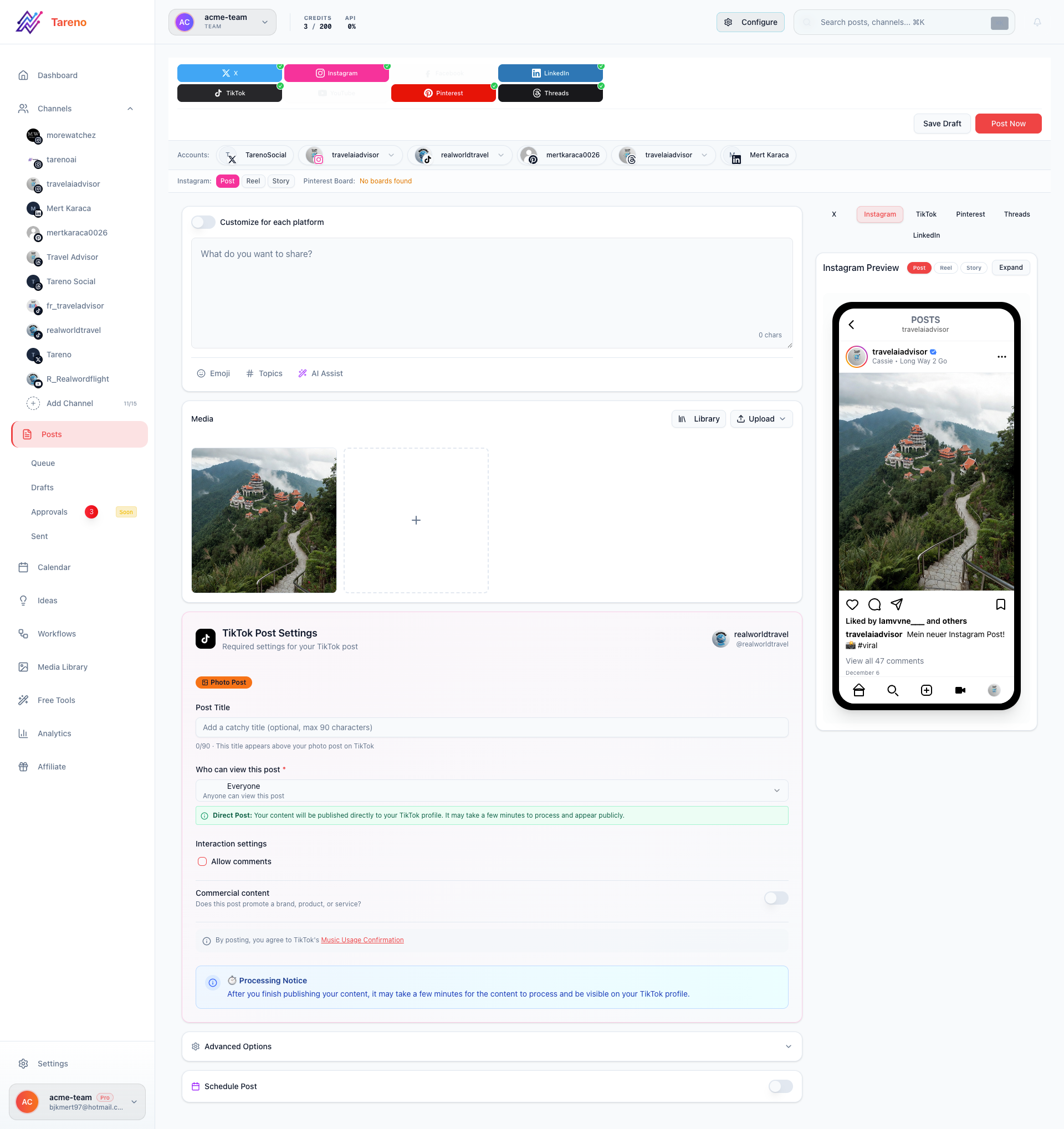
Tareno's AI composer helps you structure posts with proper headings, source citations and definitions — all prerequisites for strong GEO performance.
Map the topic cluster. Identify the core question, sub-questions, comparisons, and adjacent misconceptions.
Draft for answer extraction. Put the definition, summary bullets, comparison, and workflow early.
Add proof and boundaries. Cite official or primary sources where possible, and state what the content does not claim.
Run editorial QA. Remove vague intros, duplicate FAQs, and unsupported statements.
Refresh strategically. Revisit volatile sections when product details, interfaces, or public guidance change.
Mini-example: one pillar page on GEO can produce five support assets — a glossary page, a measurement guide, a structured-data explainer, a content QA checklist, and a case-based comparison article. That cluster model is often more useful than trying to make one giant page answer everything.
If your team wants to turn video transcripts into structured source material, GEO gets easier because the raw material is already closer to answer-ready publishing.
For teams building broader content operations, this is also where process discipline matters. If your editorial stack is fragmented, GEO work turns messy fast. A platform like Tareno is relevant here not because it “boosts ChatGPT rankings,” but because it can support the workflow around question mapping, drafting, review, repurposing, and multi-channel publishing. Teams can use Ideas Boards to turn a broad GEO theme into narrower user questions, use AI assistance for first-pass summaries, and use Workflows to enforce QA before publication. In other words, you should build repeatable content operations instead of one-off hacks.
How to Evaluate GEO Without Fake Precision
One of the fastest ways to ruin a GEO program is to promise measurement that does not exist. Most teams cannot track a neat “ChatGPT rank” the way they track a keyword position. That does not mean GEO is unmeasurable. It means measurement has to be indirect and operationally honest.
Start with three anchor questions: Is the page easier to understand? Is it covering real buyer questions better? Is it becoming stronger source material over time? Those questions create a more useful dashboard than vanity metrics.
A practical GEO evaluation stack can include:
Content quality checks: does the page open with a clear answer, define terms early, and remove unsupported claims?
Cluster coverage: does the article connect to the right supporting pages, glossary terms, and comparisons?
High-intent performance: are your evergreen explainer pages earning qualified visits, deeper engagement, or better downstream conversions?
Sales and enablement reuse: are internal teams reusing the page because it explains the topic clearly?
Refresh discipline: are volatile sections reviewed on a real schedule?
Mini-example: imagine a comparison article that does not suddenly “rank in ChatGPT,” but after a rewrite it gets used more often by sales, earns better engagement from informational visitors, and becomes the page your own team links to when explaining a concept. That is a real GEO improvement because the content became more referenceable.
When to Use GEO — and When Not to Overinvest
GEO is most useful for high-consideration informational content, buyer education pages, glossary entries, process explainers, product comparisons, and evergreen decision support. It is less useful as the main optimization lens for low-value trend recaps, shallow news rewrites, or content that has no stable informational core.
Mini-example: an evergreen guide on how to choose a social media workflow platform is a strong GEO candidate. A reactive meme recap from a one-week campaign usually is not.
A good rule of thumb: invest in GEO when the user needs a reliable explanation, a trade-off, or a decision. Do not overinvest when the content is ephemeral, entertainment-led, or too thin to earn trust anyway.
Another useful filter is claim sensitivity. The more consequential the topic, the more GEO should look like editorial governance rather than growth hacking. If you publish advice about strategy, tools, pricing, or implementation, your page should make assumptions explicit and show where the information comes from. Mini-example: a buyer-facing software comparison should explain which criteria were used and when the page was last reviewed. That makes the content stronger for people, stronger for search, and more usable for AI systems that need clean source material.
Common GEO Mistakes
The first mistake is treating GEO like a secret ranking hack. That mindset leads to gimmicks instead of better source material.
The second mistake is publishing AI-generated summaries without source review. Fast output is not the same as reference-grade content, and AI output still needs editorial validation.
The third mistake is adding structure without adding substance. FAQs, tables, and definition boxes help only when they contain real specificity.
The fourth mistake is measuring the wrong thing. Traffic still matters, but GEO work should also improve clarity, cluster coverage, and the ability of pages to answer real questions directly. In the same way that semantic clarity beats shallow metadata tricks, strong GEO depends on meaning before formatting.
Mini-example: adding FAQ formatting to a vague page does not make it ChatGPT-ready. Rewriting the page so every section answers a concrete user question does.
FAQ
1) Is GEO different from SEO?
Yes. They overlap, but SEO is centered on search visibility while GEO is centered on AI answer readiness and referenceability.
2) Can you rank in ChatGPT the same way you rank in Google?
Not reliably. ChatGPT is not a normal SERP, and publishers do not have a stable public factor list to optimize against.
3) Does structured data help with GEO?
It can help machine readability and content clarity, but it should not be framed as a guaranteed path to LLM citation.
4) How do you measure GEO performance?
Mostly indirectly: by tracking high-intent content performance, watching for source mentions where visible, reviewing whether pages are answer-ready, and monitoring whether your best knowledge assets are current and specific.
5) Should every article be optimized for GEO?
No. Prioritize content where users need explanation, comparison, or decision support.
6) Can AI-written content perform for GEO?
Only if it is edited into something specific, trustworthy, and genuinely useful. Raw AI output is usually too generic to become reliable source material.
Conclusion
The real promise of GEO is not that it gives marketers a new cheat code. It is that it forces clearer thinking about what makes content reusable inside AI-mediated discovery. If your page defines terms early, shows its sources, explains trade-offs, and answers the user’s actual question, it becomes easier for both humans and machines to trust.
That is why the smartest GEO strategy is usually boring in the best sense. It looks like disciplined editorial work: better topic mapping, cleaner structure, tighter claims, stronger updates, and fewer vague pages. In a landscape shaped by conversational search, that discipline is a competitive advantage.
The practical upside is cumulative. Each well-structured explainer, comparison, and glossary page becomes another reliable building block in your knowledge base. Over time, that makes your brand easier to discover, easier to trust, and easier to reuse across search, sales, and AI-assisted research.
“The practical goal of GEO is not to control ChatGPT. It is to make your content easier to retrieve, interpret, and trust when AI systems assemble answers.”
Key Takeaways
GEO is best understood as referenceability optimization, not as a guaranteed ChatGPT ranking system.
The strongest GEO pages combine topical clarity, extractable structure, and trustworthy sourcing.
SEO and GEO overlap, but GEO adds a distinct focus on answer usefulness inside AI-generated responses.
Structured data and formatting can help machine readability, but they are not substitutes for substance.
Content teams usually win GEO through repeatable editorial systems, not isolated hacks.
Sources
Aggarwal, P. et al. GEO: Generative Engine Optimization. arXiv:2311.09735 — https://arxiv.org/abs/2311.09735
Google Search Central. Creating helpful, reliable, people-first content — https://developers.google.com/search/docs/fundamentals/creating-helpful-content
Google Search Central. Intro to How Structured Data Markup Works — https://developers.google.com/search/docs/appearance/structured-data/intro-structured-data
Google Search. How Does Google Determine Ranking Results — https://www.google.com/search/howsearchworks/how-search-works/ranking-results/