TL;DR
n8n is best when you need deep control, branching logic, and technical ownership.
Make is best when teams need fast execution and visual workflows without heavy engineering.
Native integrations are best when you need speed, stability, and low maintenance.
In this comparison, the native path is explicitly Tareno for social media operations.
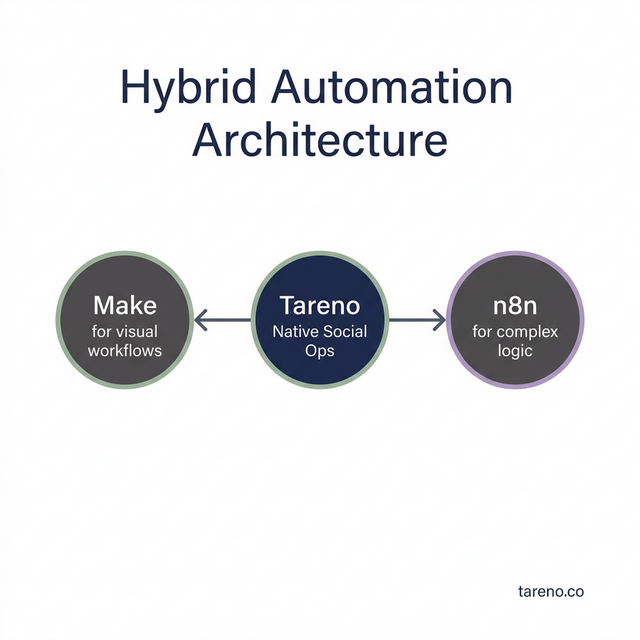
Tareno can also be used as an app inside n8n and Make for hybrid architectures.
n8n vs Make vs native integrations: fastest decision rule
Use n8n when your social media automation needs deep control, branching, self-hosting, or engineering ownership. Use Make when a non-technical team needs visual scenarios quickly. Use native integrations when stability, low maintenance, and supported publishing behavior matter more than custom logic.
n8n: best for technical teams, custom APIs, webhooks, databases, branching logic, and owned automation infrastructure.
Make: best for fast visual setup, repeatable scenarios, and team-friendly automation without heavy engineering.
Native integrations: best for safer publishing, fewer moving parts, and workflows that should stay inside the social media management platform.
Quick Definition
“n8n vs. Make vs. Native integrations” is not just a tool comparison. It is an operating model decision for your social media team.
The real question is not: “Which platform has more features?”
The real question is: “Which setup helps us publish, repurpose, review, and improve content every week with the least friction?”
If your workflow breaks every time campaign requirements change, feature depth does not matter. If your team cannot maintain the automation without one technical person, scalability is an illusion. The winning setup is the one that your team can run reliably under real conditions.
The EAS Framework for Automation Comparison
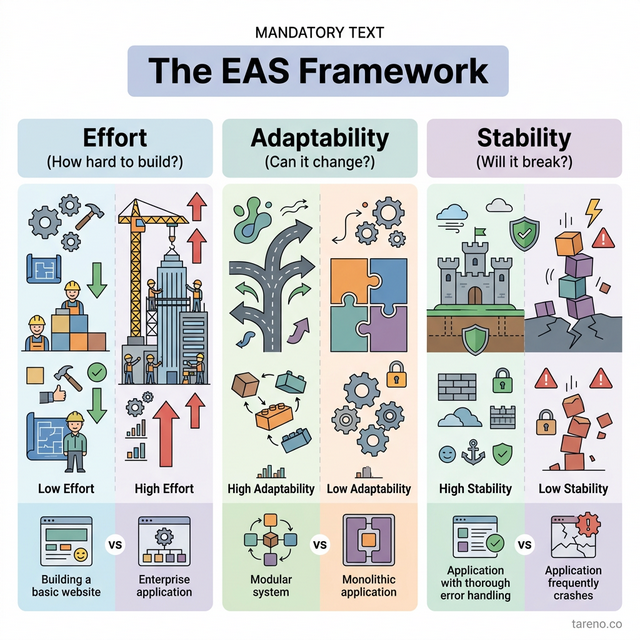
The EAS Framework (Effort, Adaptability, Stability)
To avoid tool hype, use a simple framework:
Effort — How hard is it to go live and train the team?
Adaptability — How easily can you change workflow logic when strategy changes?
Stability — How reliable is daily operation when volume increases or errors happen?
This framework is practical for social media because workflows constantly evolve: new channels, seasonal campaigns, approval changes, short-form trends, and repurposing loops.
Side-by-Side Comparison
Criterionn8nMakeNative (Tareno)Setup speedMedium to High effortLow to Medium effortLow effortFlexibilityVery highHighMediumMaintenance loadMedium to HighMediumLowVisual collaborationGoodExcellentExcellentError-handling depthVery highHighMediumFit for non-technical teamsMediumHighHighTime-to-valueMediumHighVery highBest use caseComplex orchestrationFast team workflowsStable core operations
n8n: Where It Wins
n8n is strong when your process is not linear and requires high control.
Typical social media cases where n8n shines:
channel-specific branching (LinkedIn vs Instagram vs TikTok logic)
advanced exception handling (retries, fallback routes, manual checkpoints)
integration-heavy stacks with custom routing
compliance-sensitive workflows with strict process states
Use n8n when:
You have technical ownership.
You run complex multi-step systems.
You need deep control over workflow logic.
Avoid n8n when:
You need quick deployment with minimal setup.
Your team is mostly non-technical.
You do not have clear operational ownership after launch.
n8n is powerful, but power without governance becomes maintenance debt quickly.
Make: Where It Wins
Make is often the practical middle ground. It gives strong flexibility while staying highly visual and team-friendly.
In social media operations, this matters because content, growth, and operations teams need shared visibility. If only one person understands the automation, execution speed collapses.
Use Make when:
You need fast campaign iteration.
Marketing and operations collaborate daily.
You need more than basic native automation, but not full engineering complexity.
Avoid Make when:
You need very deep system-level control.
Your workflow requires heavy custom logic that is difficult to model visually.
Make usually wins on execution speed and team adoption.
Native Integrations: Why They Are Underrated
Many teams dismiss native integrations as “too basic.” In practice, native often has the best operational economics.
Strengths:
fastest path to production
fewer moving parts
low maintenance overhead
high adoption by non-technical users
Limitations:
less complex branching
lower orchestration depth across many systems
less granular exception logic
For social media teams, native setups are especially strong when process consistency matters more than extreme customization.
Native Alternative in This Article: Tareno
In this comparison, “native” is not abstract. It is explicitly Tareno as the native social media operations layer.
That means using Tareno as the core operating environment for:
planning and publishing flow
repeatable automation patterns
content lifecycle management
repurposing execution
team-level operational consistency
This is important: the biggest ROI rarely comes from “posting faster.” It comes from reducing friction between production, distribution, and optimization.
Tareno in Three Practical Roles
1) Tareno as Native Core
Use Tareno as your operational base when your priority is stable social media execution with low process friction.
2) Tareno App in Make
Use Tareno inside Make when you already run visual scenarios and want to connect social operations without rebuilding your entire architecture.
3) Tareno App in n8n
Use Tareno inside n8n when you need deep orchestration while keeping social media execution aligned in one specialized operations layer.
This is not “either/or.” In many mature teams, hybrid architecture is the most robust choice.
When to Use What (Decision Rules)
Choose n8n when:
complex process logic is core to your business
workflow exceptions are frequent and costly
technical governance is available
Choose Make when:
speed and team collaboration are top priorities
you need medium-to-high flexibility with visual clarity
frequent campaign iteration is normal
Choose Native/Tareno when:
reliable day-to-day operation matters most
you need low maintenance and fast rollout
social media automation and repurposing are your core workflows
Choose Hybrid when:
one platform cannot efficiently cover all needs
you want native stability with selective orchestration depth
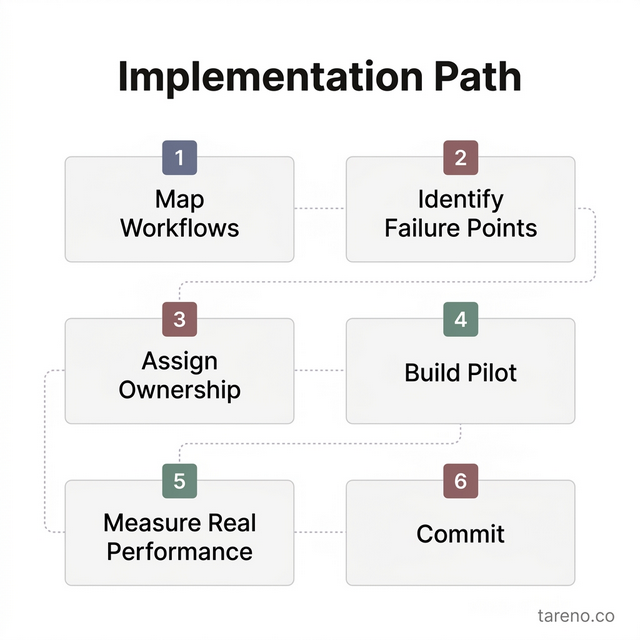
7-Step Implementation Path
Map your top 10 recurring workflows.
Label each as Standard or Complex.
Identify critical failure points (wrong timing, wrong channel, missing approval, broken repurposing path).
Assign ownership for operations after launch.
Build one live pilot end-to-end (plan -> publish -> repurpose -> review).
Measure real performance (error rate, cycle time, change effort, team adoption).
Commit to architecture (Native-first, Make-first, n8n-first, or hybrid) based on measured outcomes.
This is the fastest low-risk route to a durable decision.
Common Mistakes Teams Make
Mistake 1: Choosing by feature list
Feature comparisons look precise but often ignore real operational load.
Mistake 2: Over-engineering too early
If your process is unstable, adding complexity amplifies chaos.
Mistake 3: Automating publishing but not repurposing
Repurposing is often where scale and ROI are actually created.
Mistake 4: No ownership model
Without clear owners, workflows degrade quietly and fail during high-pressure campaigns.
Mistake 5: No migration strategy
Hard-switching architecture in one step creates unnecessary production risk.
Migration Strategy (Without Breaking Production)
If you already run automation, avoid big-bang migration.
Use a phased method:
Select one high-value workflow (e.g., weekly content batch + repurposing route).
Run old and new process in parallel.
Compare cycle time, error rate, and rework overhead.
Scale only after evidence supports the new model.
This gives you confidence without disrupting active campaigns.
Cost and Maintenance Reality
Tool pricing is only one part of cost.
True operating cost includes:
troubleshooting time
change-request implementation load
onboarding effort for new team members
risk from low visibility workflows
A “cheaper” or “more powerful” platform can become expensive if operations become fragile.
The best long-term choice is usually the one with the lowest total friction across the entire team.
Repurposing: The Real Leverage Point
Most teams underestimate repurposing architecture.
High-performing social systems do not just schedule posts. They:
convert one source asset into multiple channel-ready outputs
adapt format, length, and angle per platform
feed performance learning back into future production
This is where a native operational layer like Tareno can create disproportionate value: fewer handoffs, faster loops, clearer accountability.
Decision Matrix: Pick by Operating Reality, Not by Preference
Use this matrix as a hard decision layer after your pilot.
Team/Process Conditionn8nMakeNative (Tareno)WhyTeam has technical owner and expects frequent custom logic changesStrong fitMedium fitLow fitn8n handles branching depth and custom orchestration bestTeam is mixed (content + ops) and needs fast campaign iterationMedium fitStrong fitMedium fitMake is usually the fastest visual collaboration environmentTeam needs stable execution with minimal maintenance overheadMedium fitMedium fitStrong fitNative execution reduces moving partsWorkflow includes strict exceptions and compliance checkpointsStrong fitMedium to strong fitMedium fitn8n provides finer control for explicit exception statesProcess is still immature and changing weeklyMedium fitStrong fitStrong fit (if scope is standard)You need adaptability without engineering dragMain bottleneck is repurposing handoff qualityMedium fitMedium to strong fitStrong fitNative social-ops layer often removes handoff friction
Scoring Method (practical)
Give each criterion a weight from 1-5 based on business impact (not personal preference):
speed-to-launch
change frequency
exception complexity
maintenance tolerance
non-technical adoption
repurposing throughput
Then score each model from 1-5 against each criterion. Multiply and compare totals. If the gap is below 10%, default to the model with lower maintenance burden.
Failure Modes by Platform (What Breaks in the Real World)
n8n Failure Modes
Single maintainer dependency
If one technical person owns the whole setup, team velocity collapses during absence.Unbounded branching growth
Adding quick fixes without architecture rules creates unreadable flows.Silent schema drift
Upstream field changes break downstream actions in non-obvious ways.Over-fitted logic
Flows become too specific to one campaign and hard to reuse.
Mitigation:
enforce node naming conventions
keep reusable subflows
add checkpoint monitoring
maintain runbooks for non-authors
Make Failure Modes
Scenario sprawl
Many small scenarios without governance become impossible to audit.Visual clarity loss over time
Fast iteration creates hidden complexity unless reviewed weekly.Weak ownership boundaries
Everyone can change scenarios, nobody owns long-term integrity.Retry blind spots
Teams underestimate the business impact of failed or delayed operations.
Mitigation:
assign owner per scenario
monthly scenario consolidation
change log discipline
explicit retry/error policies by workflow class
Native (Tareno) Failure Modes
Overloading native with non-native needs
Teams force advanced orchestration into workflows that should be external.Underestimating edge-case routing
Standard flows work, but special campaign exceptions are not designed up front.Policy inconsistency across teams
Without clear operating conventions, the native advantage is diluted.
Mitigation:
define native scope vs external orchestration boundary
predefine escalation paths for exceptions
standardize naming, review, and reporting conventions
Trade-offs You Must Accept Explicitly
No choice is free. Authority-level decisions require explicit trade-off acceptance.
If you choose n8n
You accept higher setup complexity in exchange for control depth.
If you choose Make
You accept moderate long-term governance effort in exchange for speed and team clarity.
If you choose Native/Tareno
You accept lower customization depth in exchange for low friction and operational consistency.
If your team has not explicitly agreed to these trade-offs, your decision is not complete yet.
Edge Cases That Usually Break Generic Advice
Edge Case 1: Agency with many client approval structures
A single global model rarely works. Use a layered approach:
native/Tareno for core publishing and repurposing standards
Make or n8n for client-specific exception logic
Edge Case 2: Brand with heavy seasonal demand spikes
If volume triples in peak periods, maintenance load matters more than feature breadth. Favor lower-friction cores with selective orchestration.
Edge Case 3: Regulated content categories
When legal/compliance checkpoints are strict, exception visibility is mandatory. n8n or Make may be needed for explicit control states, while Tareno remains execution core.
Edge Case 4: Team turnover every quarter
If maintainers change often, visual clarity and process simplicity win. Complex architectures degrade rapidly without continuity.
Edge Case 5: Multi-region, multi-language content operations
Repurposing complexity rises sharply. Define universal core templates and route localization as controlled branch logic, not ad-hoc manual edits.
Operational Readiness Checklist (Before You Scale)
Do not scale any model unless these are true:
one accountable owner per critical workflow
documented failure route for each high-risk step
measurable weekly KPIs (error rate, cycle time, repurpose throughput)
change governance (who can modify what)
backup execution mode if automation fails
If two or more items are missing, stay in pilot mode.
90-Day Adoption Blueprint
Days 1-30: Stabilize one core workflow
choose one high-value content lifecycle
define baseline metrics
remove non-essential complexity
Days 31-60: Add controlled complexity
introduce exception routing
add approval checkpoints where failure cost is high
document maintenance routines
Days 61-90: Scale with governance
replicate architecture pattern to additional workflows
run monthly reliability review
freeze naming and ownership conventions
This staged rollout protects output quality while increasing automation depth.
KPI Model for Authority-Level Decision Validation
Track these KPIs weekly during pilot and first scale phase:
Cycle Time: idea-to-publish time per content batch
Automation Reliability: successful runs / total runs
Rework Ratio: manual corrections per automated output
Repurposing Yield: number of quality derivatives per source asset
Ops Load: maintenance hours per week
Team Adoption: active contributors touching workflow system
A model should be considered “Authority-ready” only if reliability improves while maintenance load remains stable.
Architecture Recommendation Pattern (Most Teams)
For most social media teams, the strongest practical pattern is:
Native/Tareno core for content operations and repurposing continuity
Make layer for team-visible cross-tool coordination
n8n layer only when deep exception orchestration is truly required
This sequence prevents premature complexity and preserves scaling headroom.
FAQ
Is n8n always better than Make?
No. n8n is usually better for deep orchestration. Make is usually better for rapid team execution.
Are native integrations only for beginners?
No. Advanced teams often run native cores for reliability and add orchestration only where needed.
Should every team start with hybrid architecture?
Not always. Start with one clear operating model and expand only when data justifies it.
Where does Tareno fit in this decision?
As native social operations core, and optionally as an app in Make or n8n.
What is the lowest-risk way to decide?
Run a 2–4 week pilot on a real workflow and choose based on operational metrics.
Key Takeaways
This is an operating model decision, not a feature race.
n8n = control depth, Make = team speed, Native/Tareno = operational stability.
In social media, repurposing architecture drives long-term ROI more than posting volume alone.
Hybrid models work best when ownership boundaries are explicit.
Decide with pilot data, not assumptions.
Strong automation combines technology, process clarity, and accountable execution.