Social media managers rarely need one isolated feature. Their daily work connects ideas, stakeholder review, platform-native versions, scheduling, engagement, reporting, and the next piece of reusable content.
The best tool is therefore not the product with the longest checklist. It is the one that removes the team's most expensive repeated handoff without hiding ownership or weakening review.
This guide compares the best social media tools for social media managers in 2026 by workflow fit. It covers lightweight schedulers, visual-first workflows, broad suites, analytics-led products, inbox tools, approval platforms, and systems that connect the full content lifecycle.
Quick shortlist by workflow fit
Choose Tareno when workflow automation and repurposing must stay connected; Buffer for a lightweight publishing-and-insights loop; Later for a visual-first workflow; Hootsuite for broad suite coverage; Metricool for reporting and competitor context; Agorapulse for inbox operations; and Planable when feedback and approval are the main bottleneck.
Use the shortlist as a starting hypothesis, not a verdict. Test the tool with a real week of content, including one stakeholder delay, one platform rewrite, one failed post, and one winner that should be reused.
What social media managers need from a tool
A manager needs enough structure to know what is ready, blocked, approved, scheduled, published, and worth repeating. The interface should reduce status chasing rather than create another dashboard that must be reconciled manually.
Channel support matters, but platform-native control matters more. A LinkedIn post, TikTok caption, Instagram carousel, Pinterest Pin, and YouTube Short should share campaign context without being forced into identical copy.
Teams with stakeholders also need exact-version review. Comments, change requests, owners, and approval history should sit beside the asset that will actually publish.
The MANAGER framework
Use seven checks to evaluate the daily job: Multi-platform publishing, Approvals, Numbers, AI support, Governance, Engagement, and Repurposing.
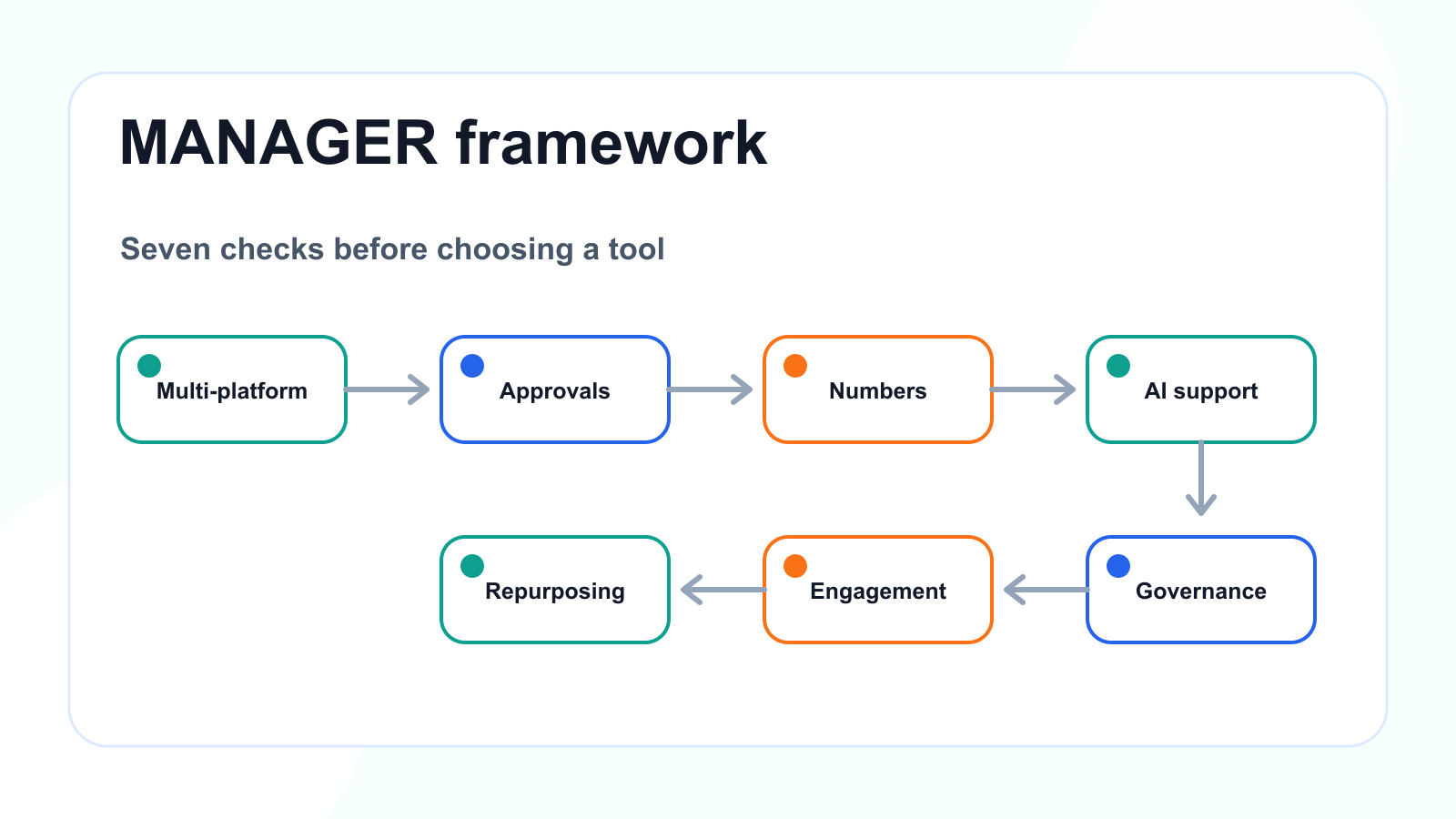
The MANAGER framework tests publishing, approvals, reporting, AI, governance, engagement, and reuse.
Multi-platform publishing and approvals
Confirm that the tool supports every active format, preserves platform-specific versions, and connects approval state to the publishing calendar. A strong post scheduling system should make it hard for an outdated or unapproved version to go live.
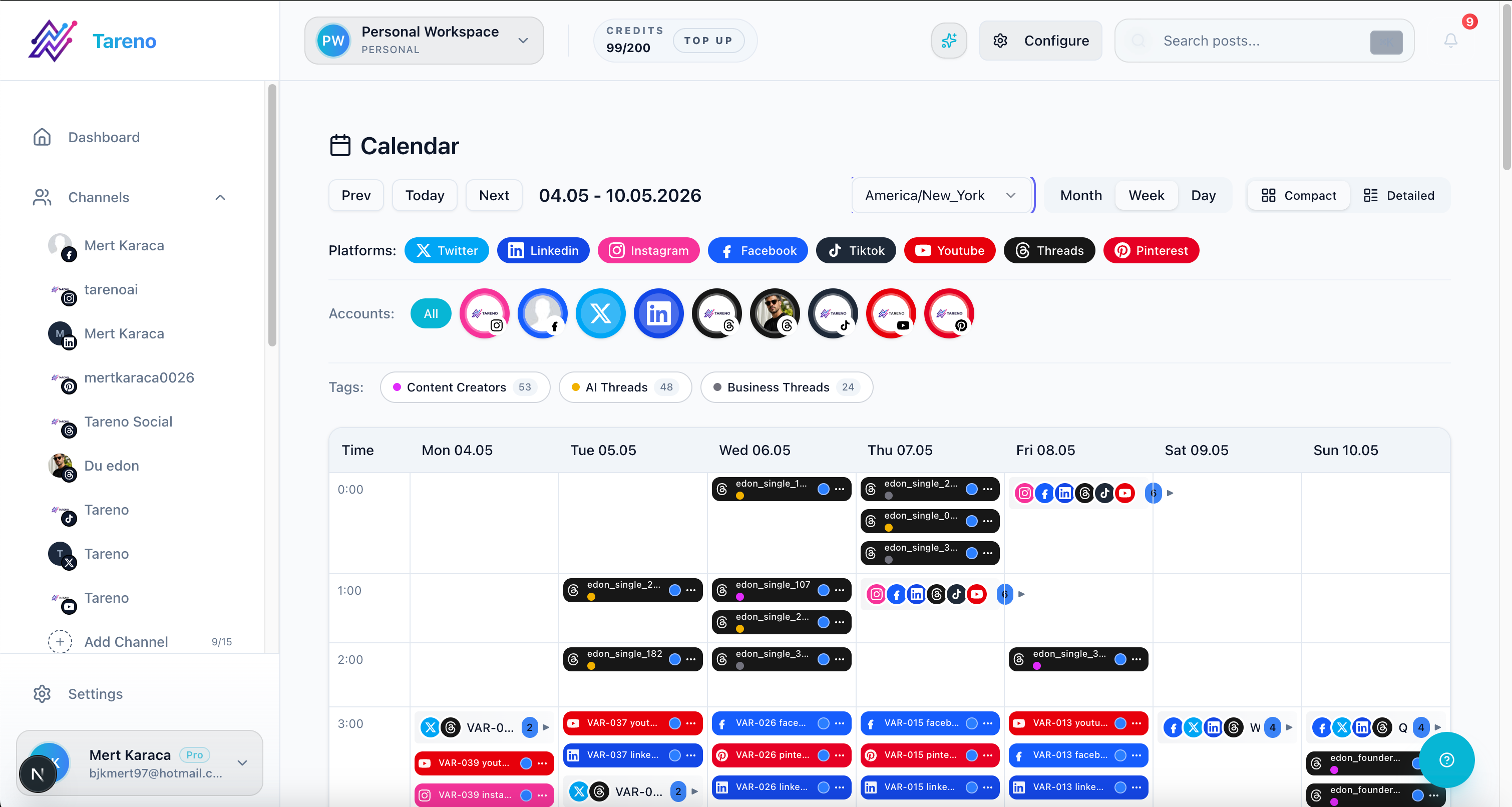
A cross-channel calendar reveals platform versions, timing conflicts, and the approval state before publication.
Numbers, AI, and governance
Reporting should answer what to repeat, stop, test, or repurpose. AI can accelerate hooks, rewrites, and outlines, but humans still own voice, claims, disclosure, and the final decision. Roles, activity history, and publish gates make that accountability visible.
Engagement and repurposing
If the role includes inbox and moderation, test assignment depth, saved replies, labels, and response tracking. If publishing is the bigger job, make sure winners can enter a content repurposing workflow without copy-paste administration.
Best social media tools for managers
1. Tareno — best for workflow automation and repurposing
Tareno fits managers who need boards, approvals, scheduling, analytics, workflows, roles, and reuse to operate as one content lifecycle. It is strongest when a signal should create an owned next action.
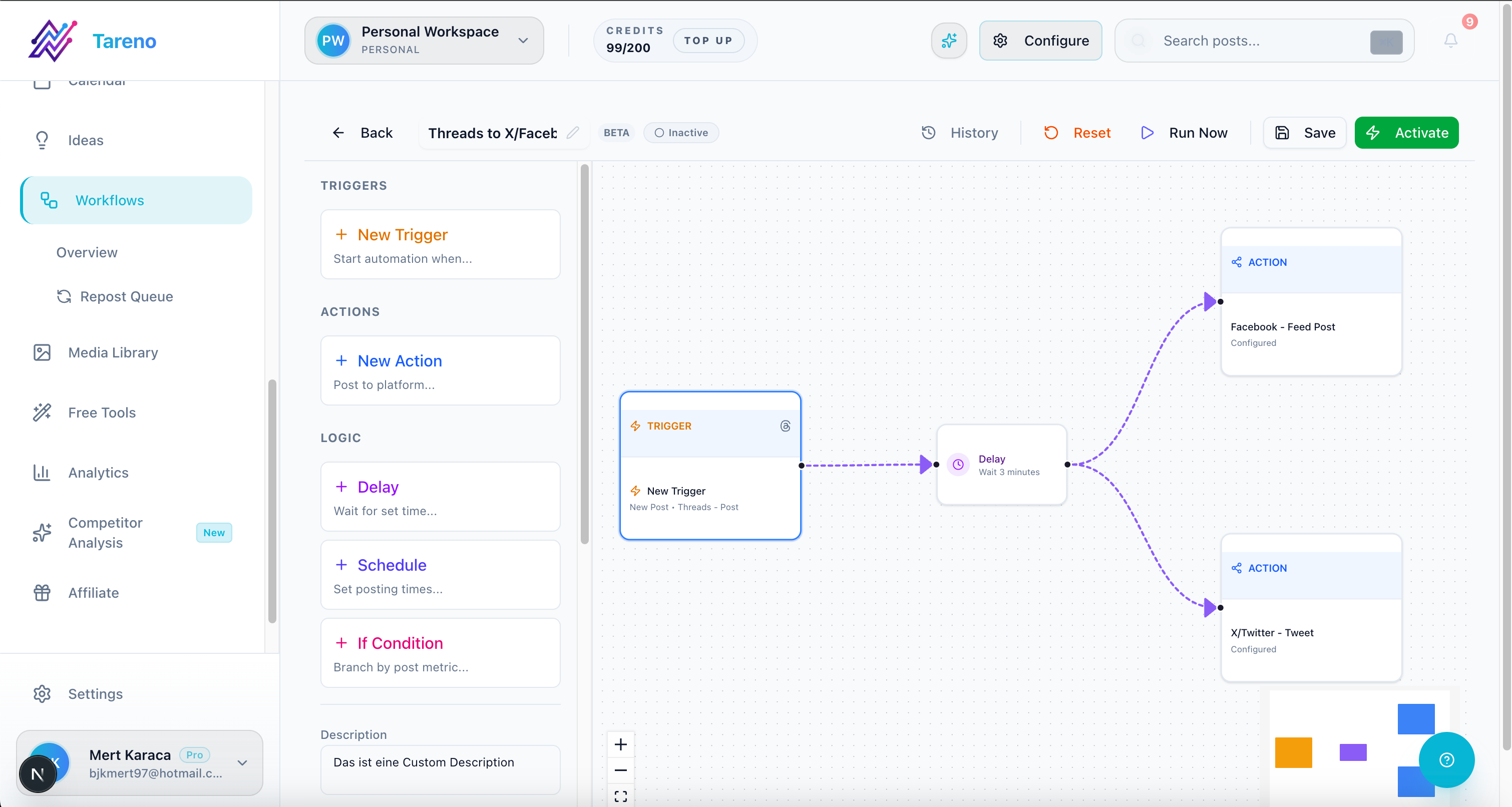
Workflow automation keeps the approved-to-scheduled handoff and analytics-to-repurposing loop visible.
Choose it when the job extends beyond queue management. A solo user who only schedules a few posts may prefer a lighter tool.
2. Buffer — best for simple scheduling
Buffer is easy to learn and suited to straightforward publishing. Its web-based Insights workspace covers ten networks with cross-channel and per-channel views, saved filters, and AI-assisted takeaways; CSV, Markdown, and PDF exports require a paid plan. Analyze remains the deeper reporting layer for Facebook, Instagram, X, and LinkedIn.
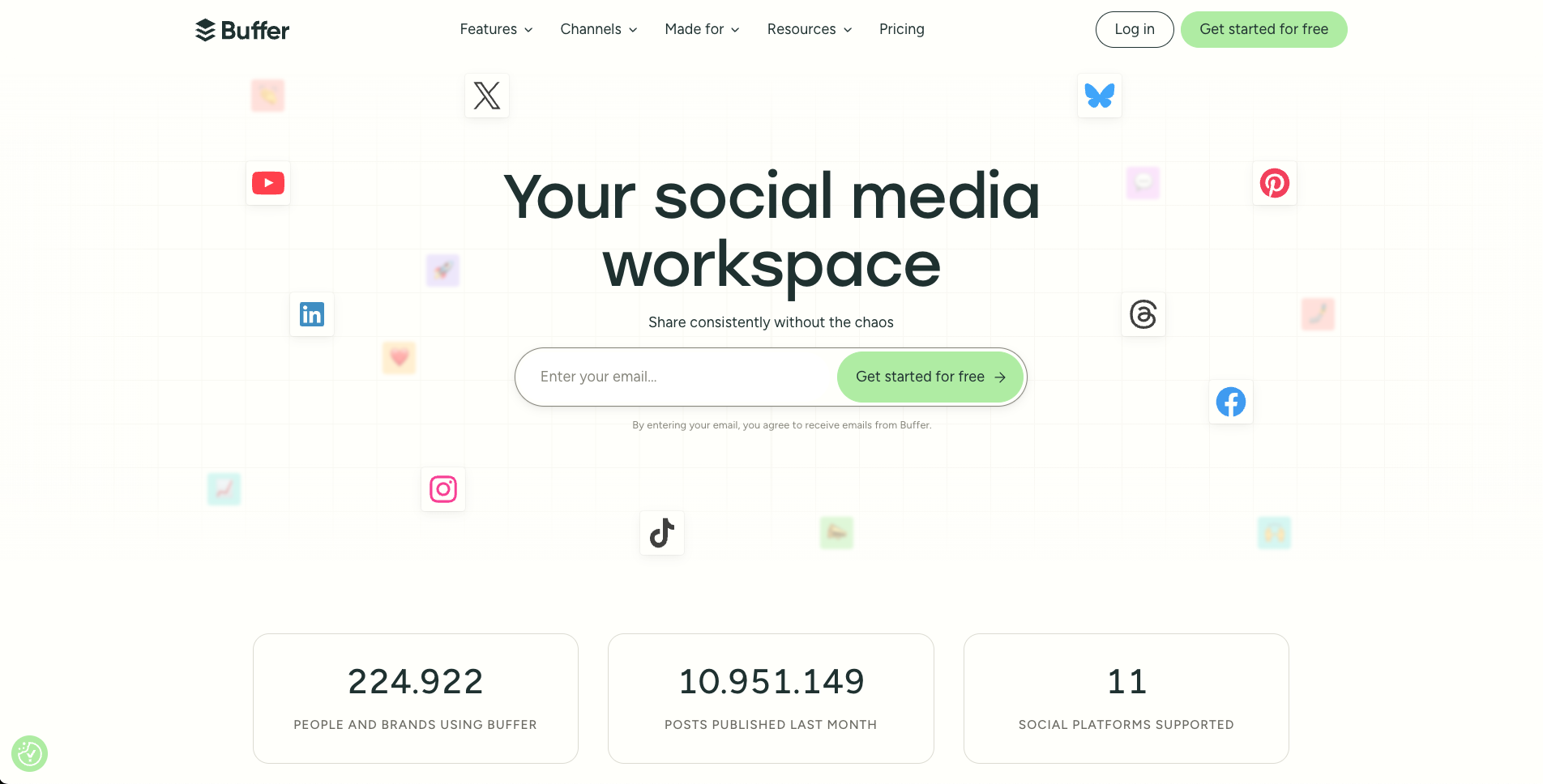
Buffer is a clean scheduling-first option for managers who value speed and a low learning curve.
Managers who need deeper approvals, automation, repurposing, or cross-functional visibility should test those limits with the real team. Also verify history and metric depth on each required network rather than treating a ten-network overview as identical coverage. For switching context, see the Buffer alternative.
3. Later — best for visual planning
Later works well for visual-first brands and creator-oriented teams. Its current workflow spans planning, approval, publishing, engagement, and analysis, while its visual calendar remains a defining strength.
Confirm the depth behind each stage for your plan: approval rules, reporting exports, automation, and evergreen reuse can matter more than whether the stage exists on a feature page.
4. Hootsuite — best for broad suite coverage
Hootsuite is relevant to organizations that want publishing, a unified inbox, analytics, competitor benchmarking, listening, and governance in a broad platform. Competitive benchmarking is included across plans with limits that vary by plan; custom ROI metrics and combined social-and-web reporting require Advanced Analytics for Enterprise. Verify that packaging when those capabilities are essential.
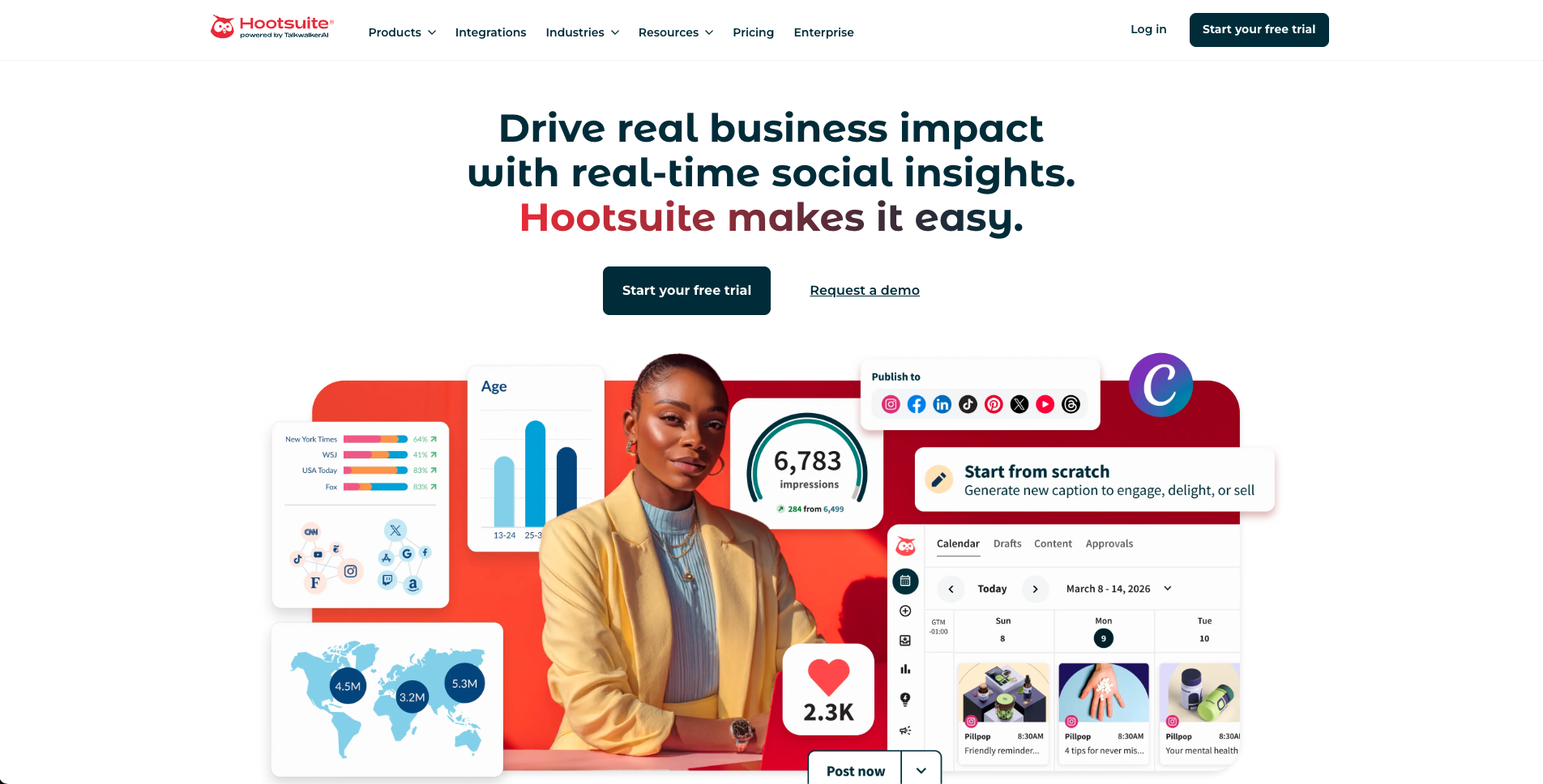
Hootsuite offers broad publishing, engagement, listening, and reporting coverage for complex organizations.
Breadth can add weight. Test whether everyday contributors can find the next action quickly and whether the suite's complexity matches the operating model.
5. Metricool — best for analytics and competitor tracking
Metricool is compelling when reporting dashboards, competitor profiles, recurring reports, and performance review are central requirements.
Ask how insights become work. Good analytics reports should lead to a decision, owner, due date, and follow-up measurement rather than end as a slide.
6. Agorapulse — best for inbox and moderation
Agorapulse suits managers handling comments, messages, assignments, moderation rules, saved replies, labels, and response reporting.
It is less differentiated when the manager's biggest need is upstream planning, creative approvals, or repurposing across the entire content lifecycle.
7. Planable — best for approval collaboration
Planable is a collaboration-first choice when comments, internal notes, stakeholder feedback, and external approval are the main source of delay. Its product now extends across creation, planning, scheduling, engagement, and analysis, so evaluate the whole path rather than treating it as review-only.

Planable is strongest when stakeholder feedback and approval collaboration create the biggest delay.
Test the post-approval path carefully: confirm that the approved version, publishing status, reporting output, automation handoff, and reuse decision stay connected at the depth your team needs.
Tool comparison table
ToolBest forMain strengthMain limitationTarenoConnected workflowApprovals, automation, analytics, reuseMore depth than a basic queueBufferSimple schedulingClean queues, saved Insights views, shareable exportsLess workflow depthLaterVisual planningCreator-friendly calendarLess operational automationHootsuiteBroad suite needsPublishing, inbox, listening, analyticsCan feel heavyMetricoolReportingDashboards and competitor trackingInsight-to-action handoffAgorapulseInbox operationsAssignments and moderationLess lifecycle depthPlanableApproval collaborationReview and stakeholder feedbackLess post-approval automation
Weight each row against the work that consumes the most time today. Then add one future requirement—such as a second brand, agency clients, or a formal review gate—to avoid choosing a tool the team will immediately outgrow.
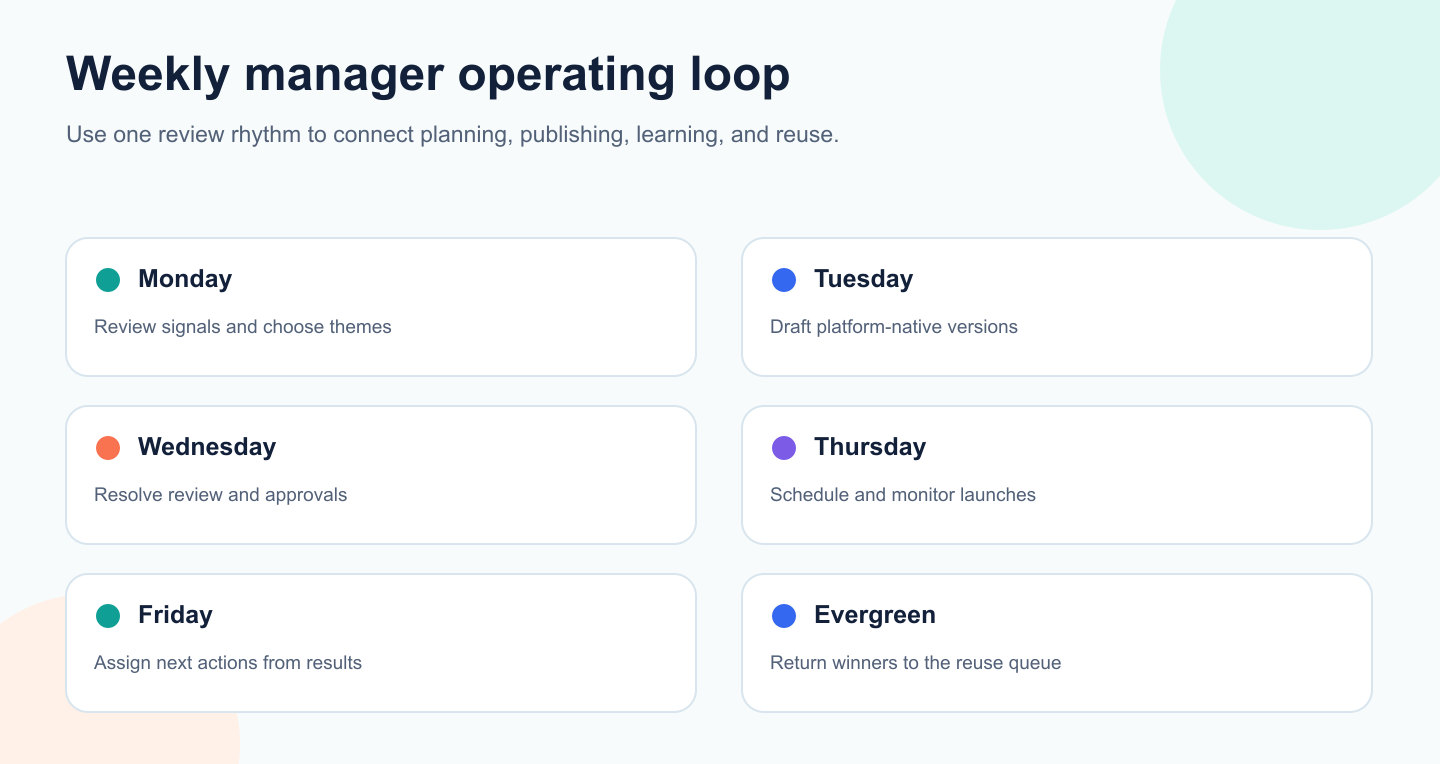
A weekly operating loop gives every insight and approved asset a clear next destination.
Workflow examples for social media managers
A weekly operating rhythm begins with signals, turns those signals into platform-native drafts, resolves approvals before the calendar deadline, and ends by assigning the next experiment or reuse task.
Approval-to-schedule workflow
A draft enters review, feedback stays attached to the exact version, requested changes return to the owner, and approval moves only the final asset into scheduling. Failed publishing should return to a visible recovery state.
Analytics-to-repurposing workflow
A post beats its baseline, the manager names why it worked, creates channel-specific derivatives, edits AI drafts, routes them through review, and measures the second wave against the original.
Score the candidate tool against that complete loop before comparing feature volume or polished dashboard design.
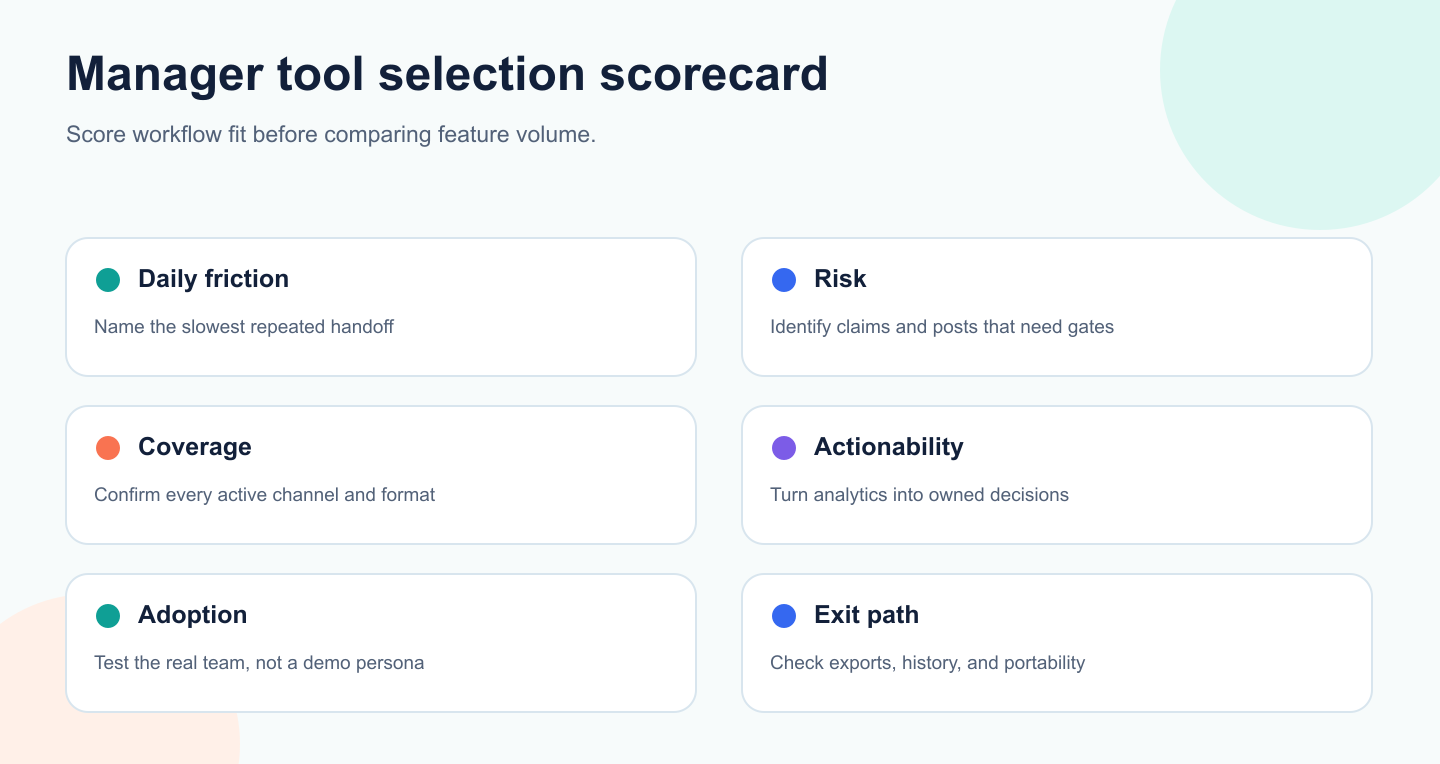
A practical scorecard keeps the buying decision focused on workflow fit, risk, adoption, and portability.
FAQ
What is the best social media tool for managers?
Tareno is the workflow-first choice; Buffer for simple scheduling; Later for visual planning; Hootsuite for suite breadth; Metricool for reporting; Agorapulse for inbox work; and Planable for review collaboration.
Do social media managers need AI tools?
AI helps with ideas, hooks, rewrites, and repurposing. Managers still need to verify facts, protect brand voice, and approve the exact version that publishes.
What should a social media management stack include?
Most teams need planning, platform-native drafting, approval, scheduling, analytics, and reuse. Inbox, listening, client dashboards, and advanced automation depend on the role.
How should managers evaluate analytics tools?
Evaluate the decisions they improve. A useful system connects metrics to an owner, due date, next test, and later measurement.
How to choose without overbuying
Start with the daily bottleneck, the highest-risk content type, and the channels that actually matter. Score the real team on adoption, not the ideal process shown in a sales demonstration.
Check exportability as well. Posts, assets, approval history, analytics, and ownership data should remain usable if the team changes tools. Workflow fit includes a responsible exit path.
Final recommendation
Keep the tool simple when the workflow is simple. Choose a broader or workflow-first platform when approvals, reporting, engagement, automation, governance, and reuse must stay connected across people and channels.
Related Tareno resources
Continue with the right workflow
Free social media toolsUse focused generators and utilities inside the workflow.Approval workflowsProtect quality with visible review gates.Metricool comparisonCompare reporting-first analytics with a connected workflow.Social media alternativesCompare switching paths across tool categories.