
Startups need social media tools that help them move fast without turning every post into a manual project. The best option is rarely the largest enterprise suite; it is the tool that helps a small team publish consistently, learn from the market, and reuse work that already proved useful.
This guide compares the best social media management tools for startups in 2026 by workflow: speed, team handoffs, AI support, repurposing, analytics, multi-platform publishing, and budget discipline. If you are still mapping the broader system, start with Tareno's small-team workflow before choosing a point solution.
TL;DR: choose by the workflow you actually need
If your startup only needs a clean publishing queue, Buffer or Later may be enough. If social media is also message testing, product education, founder-led distribution, and repurposing, choose a tool that connects planning, approvals, scheduling, reporting, and follow-up tasks.
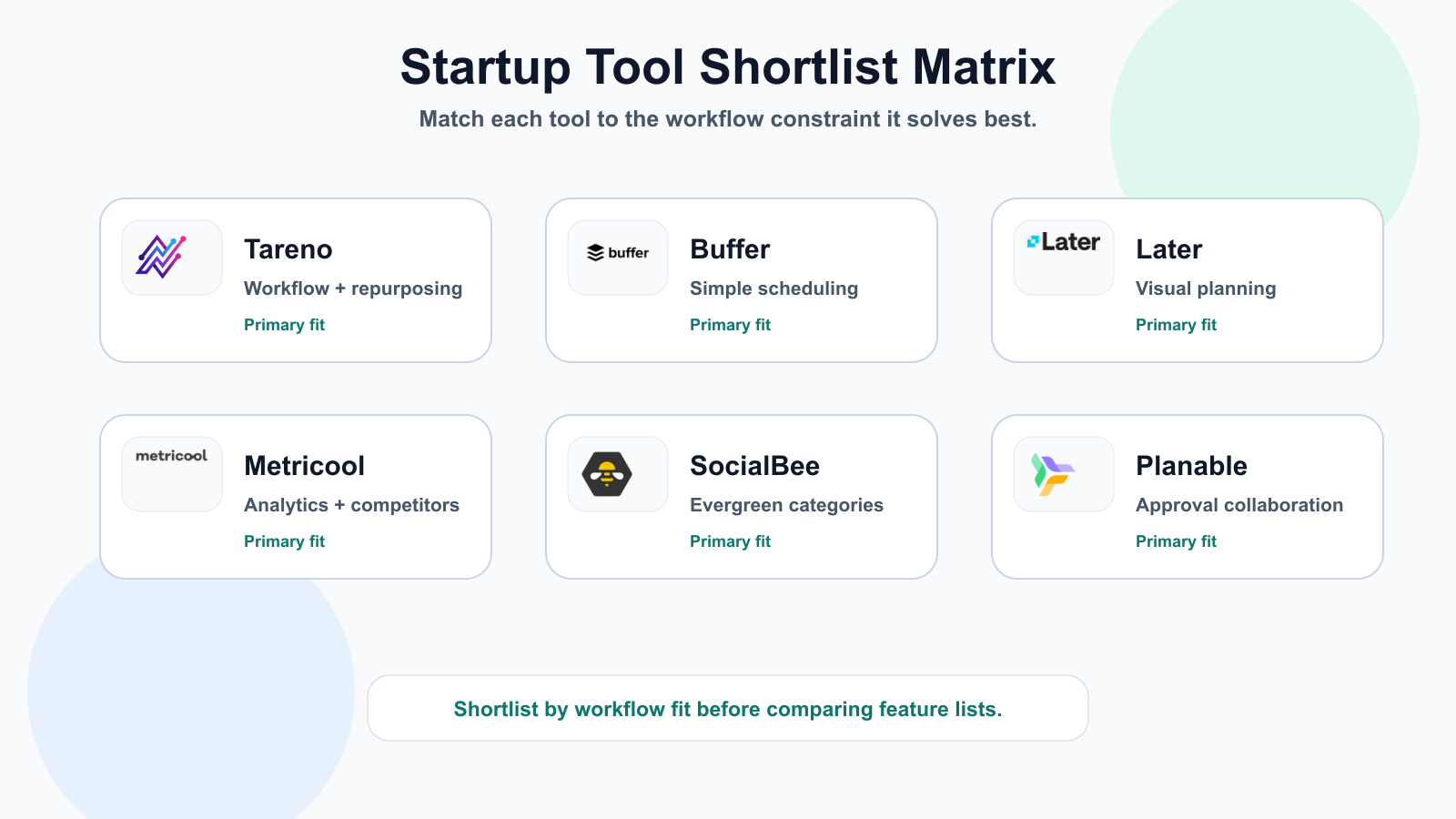
The shortlist should compare Tareno, Buffer, Later, Metricool, SocialBee, Planable by workflow fit.
Use the shortlist as a first pass: Tareno is strongest for workflow automation and repurposing; Buffer is strongest for simple scheduling; Later is useful for visual planning; Metricool is useful for analytics and competitor tracking; SocialBee is useful for evergreen categories; Planable is useful when review collaboration is the bottleneck.
The STARTUP framework
A startup social media tool should create three outcomes: speed, learning, and leverage. Speed helps the team publish. Learning turns posts into market feedback. Leverage turns one strong idea into several assets instead of one disposable update.
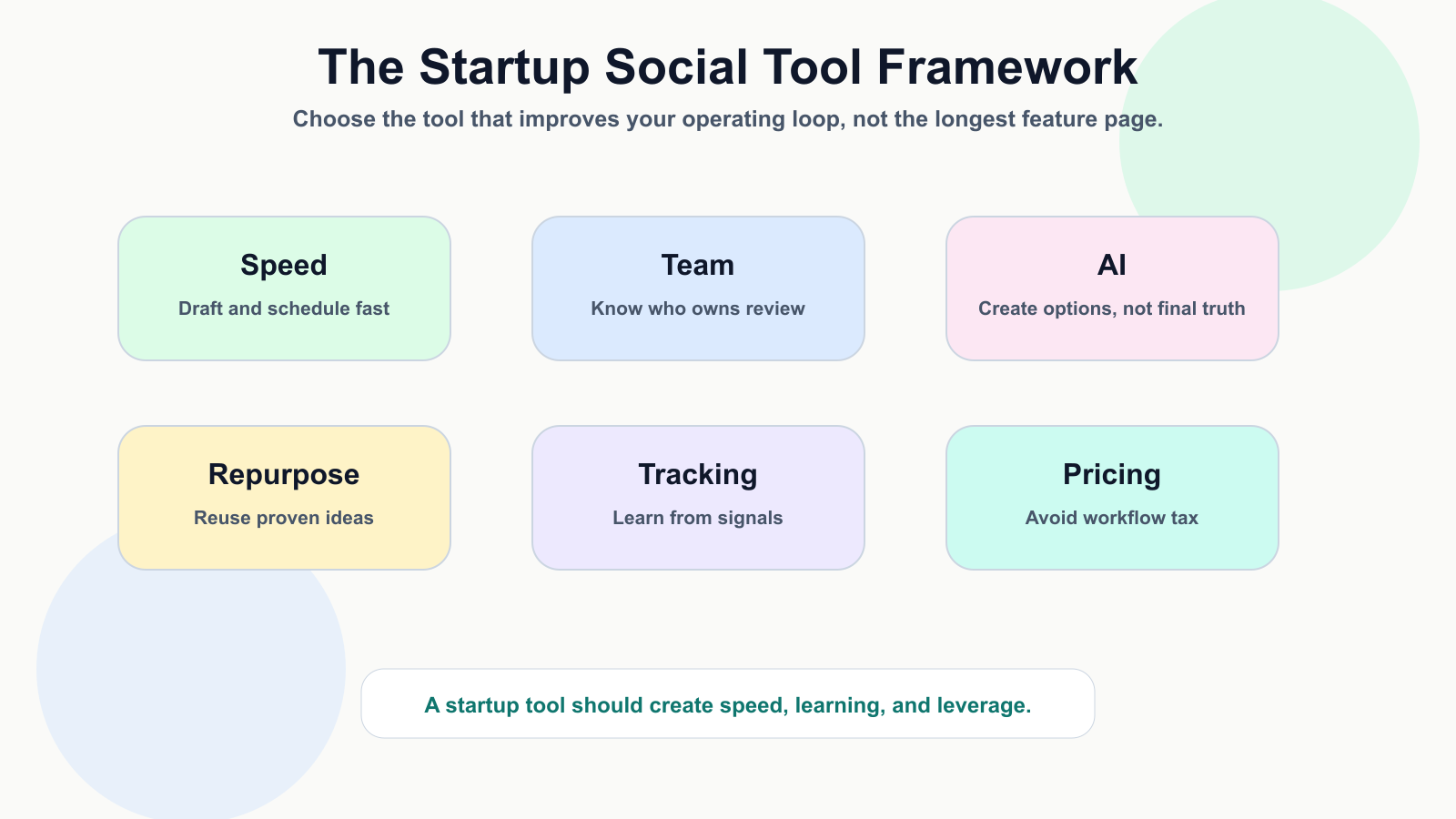
Startups should choose tools by speed, learning, repurposing, tracking, and budget fit.
The STARTUP framework keeps the buying decision practical: Speed, Team workflow, AI support, Repurposing, Tracking, Use-case fit, and Pricing. It is a better filter than counting features because most startups do not need every feature at once.
1. Tareno — best for startup workflow automation and repurposing
Tareno is the best fit when a startup wants a repeatable content operating system, not just a queue. A typical startup loop looks like this: founder idea, AI draft, product review, platform versions, schedule, analytics review, repurpose winner, and create the next follow-up. That loop is easier to run when boards, approvals, calendar, analytics, and automation live together.
Tareno is especially useful for small teams that need approval workflows around product claims, a workflow builder for repeatable handoffs, and analytics that point to next content decisions.
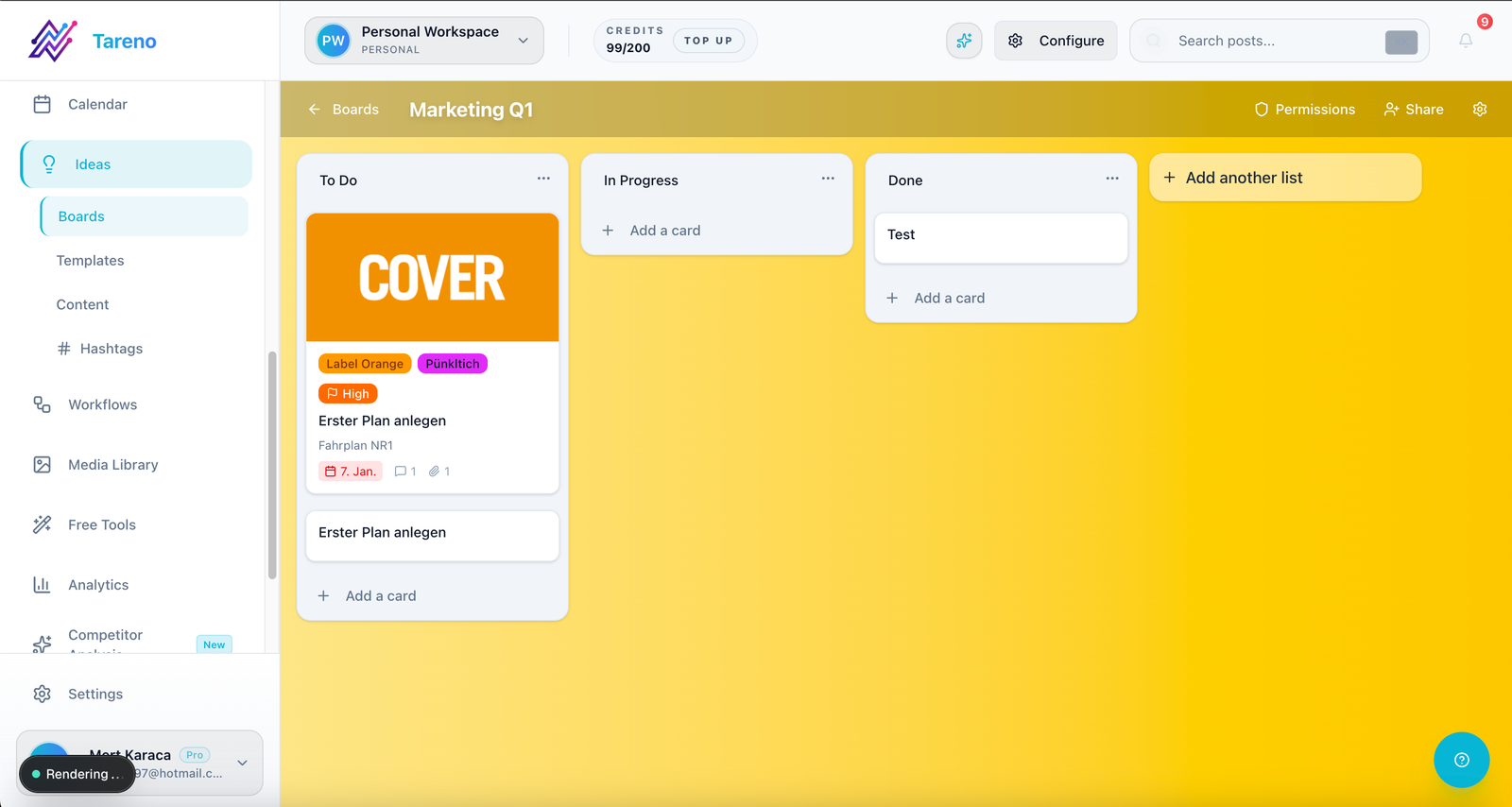
A startup content system starts by collecting founder ideas before they disappear.
The practical advantage is that founder notes and customer questions do not have to stay scattered across chat, docs, and memory. Capture them as ideas, turn the strongest ones into draft posts, and only add process when the content carries product, legal, or brand risk.
2. Buffer — best for simple startup scheduling
Buffer is a good fit when the startup's main problem is consistency. It is straightforward, easy to adopt, and useful for founder-led teams that want to draft posts, set a queue, and keep publishing without a heavy process.
Buffer may be too light if the startup needs approval stages, a repurposing queue, Make or n8n automations, deeper analytics-to-action workflows, or visibility into who changed and approved each post. Teams comparing lightweight scheduling options can also review the Buffer alternative page.
3. Later — best for visual startup planning
Later is useful for consumer, creator, ecommerce, and lifestyle startups where visual planning matters. It is strongest when Instagram, TikTok, or visual campaigns are the center of the workflow.
Later may be less ideal when the team needs product approval gates, technical workflows, or repurposing from blog posts and long-form videos. For channel-specific drafts, an Instagram caption workflow or TikTok hook workflow can help create first-pass variations without replacing final editing.
4. Metricool and analytics-first tools
Metricool is useful when social media is also market research. Startups can use analytics, competitor profiles, and dashboards to see which pain points, hooks, channels, and post formats are creating signal.
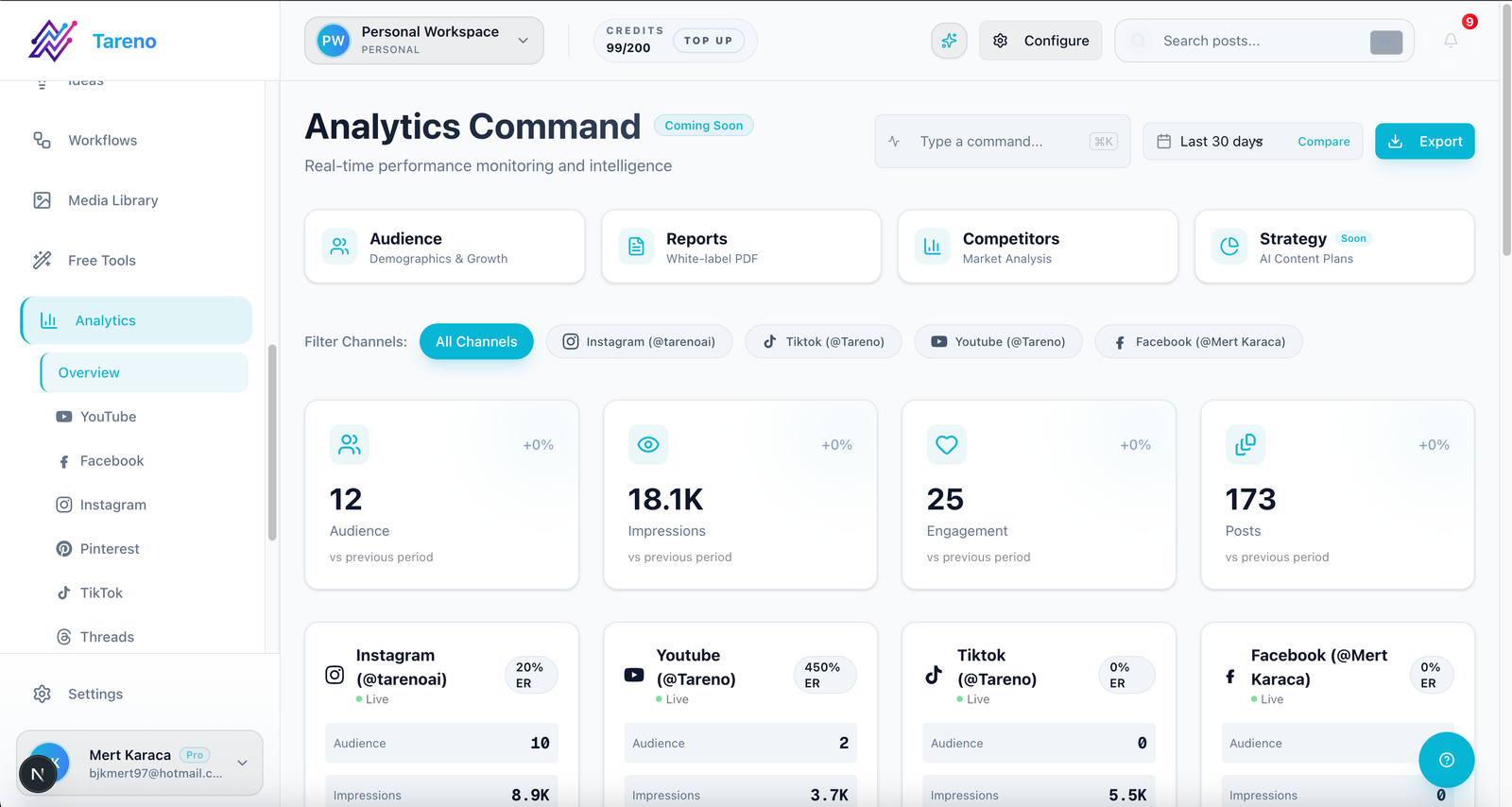
Analytics should decide which messages become follow-up posts or product stories.
The important question is not only what performed well. Ask what the market is telling you: which posts should become landing page sections, which replies reveal objections, which hooks deserve another version, and which topics belong in the next sprint.
5. Planable, SocialBee, and other focused tools
Planable is useful when collaboration and approval are the pain point. SocialBee is useful when a team wants content categories and recurring evergreen publishing. Hootsuite, SocialPilot, Sendible, and other broader suites can fit later when the team has more channels, more reviewers, or more reporting expectations.
The best choice depends on the first constraint. If publishing consistency is the constraint, pick a scheduler. If approval is the constraint, pick a review workflow. If reuse and learning are the constraint, prioritize repurposing and analytics over a bigger feature list.
6. Repurpose winners so one idea creates more leverage
Repurposing is one of the biggest startup advantages because a small team cannot afford to create every post from zero. A founder LinkedIn post can become a Threads post, TikTok script, Instagram carousel, Pinterest pin, blog section, and sales email. The key is to repurpose what already has a signal, not everything the team has published.
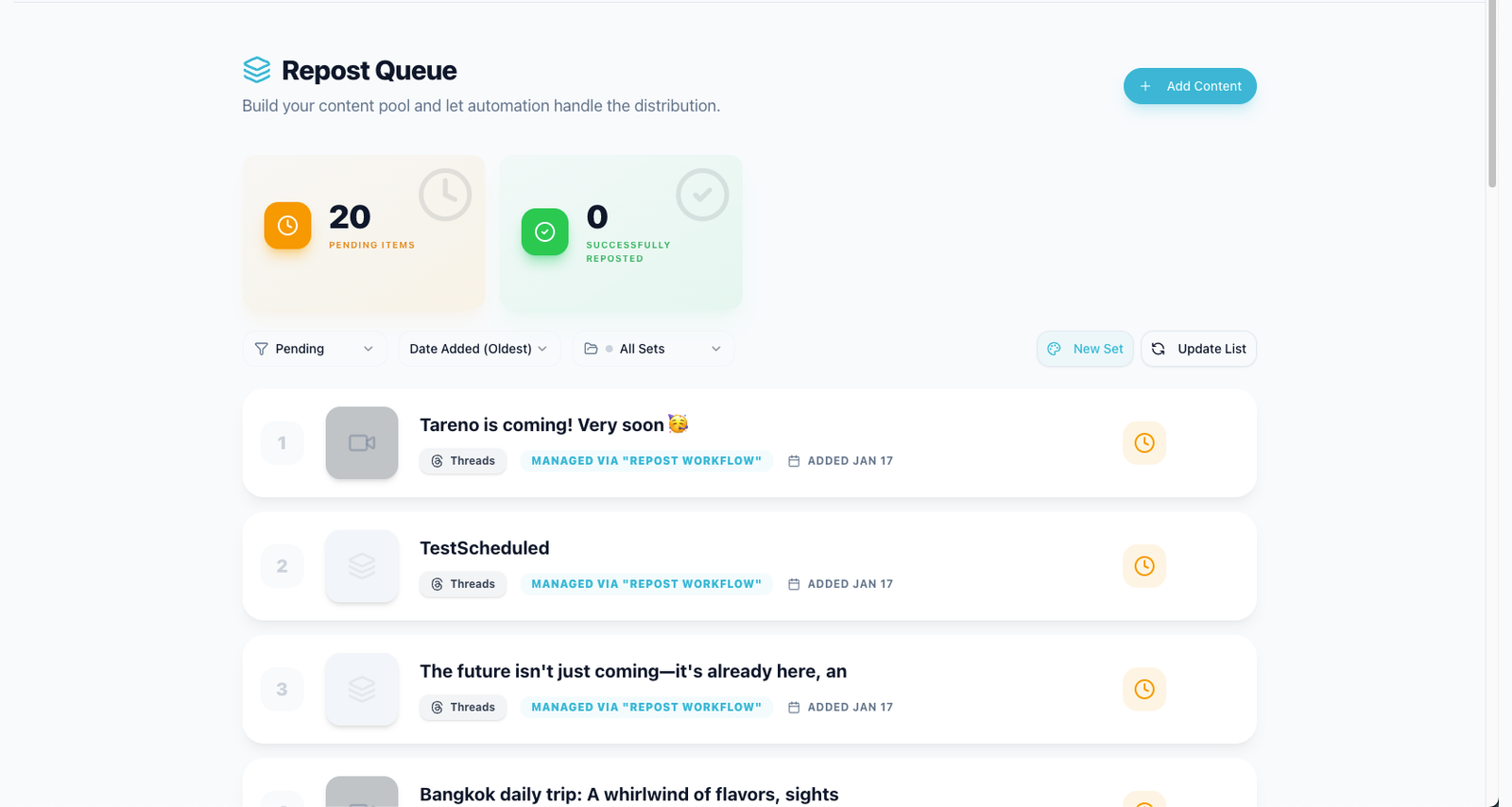
A repurposing queue helps a small startup team reuse proven ideas without starting over.
A repurposing queue turns the best ideas into a managed backlog. Pair it with a repurpose blog to social workflow and a clear scheduling process so the team can move from signal to calendar without rebuilding the process each time.
How to choose the right tool
Choose the tool that solves the next operational bottleneck, not the tool with the longest feature page. A seed-stage founder may need Buffer or Later. A product-led startup with approvals, analytics, repurposing, and automation needs a workflow system. A later-stage team may need broader reporting, inbox workflows, or competitor tracking.
Before buying, run one real week through the tool: capture ideas, draft three posts, route one for review, schedule across channels, review performance, and repurpose the strongest idea. If the tool makes that loop clearer, it is a strong fit. If the team still needs spreadsheets and reminders around it, the subscription is only solving part of the problem.
Related Tareno resources
Build the workflow in Tareno
Solution Small team social media tool Plan, approve, schedule, and report without enterprise overhead. See the workflow -> Workflow Social media repurposing workflow Turn proven startup content into platform-specific follow-ups. Build the loop -> Feature Analytics reports Use performance signals to decide next week's content. Review analytics ->